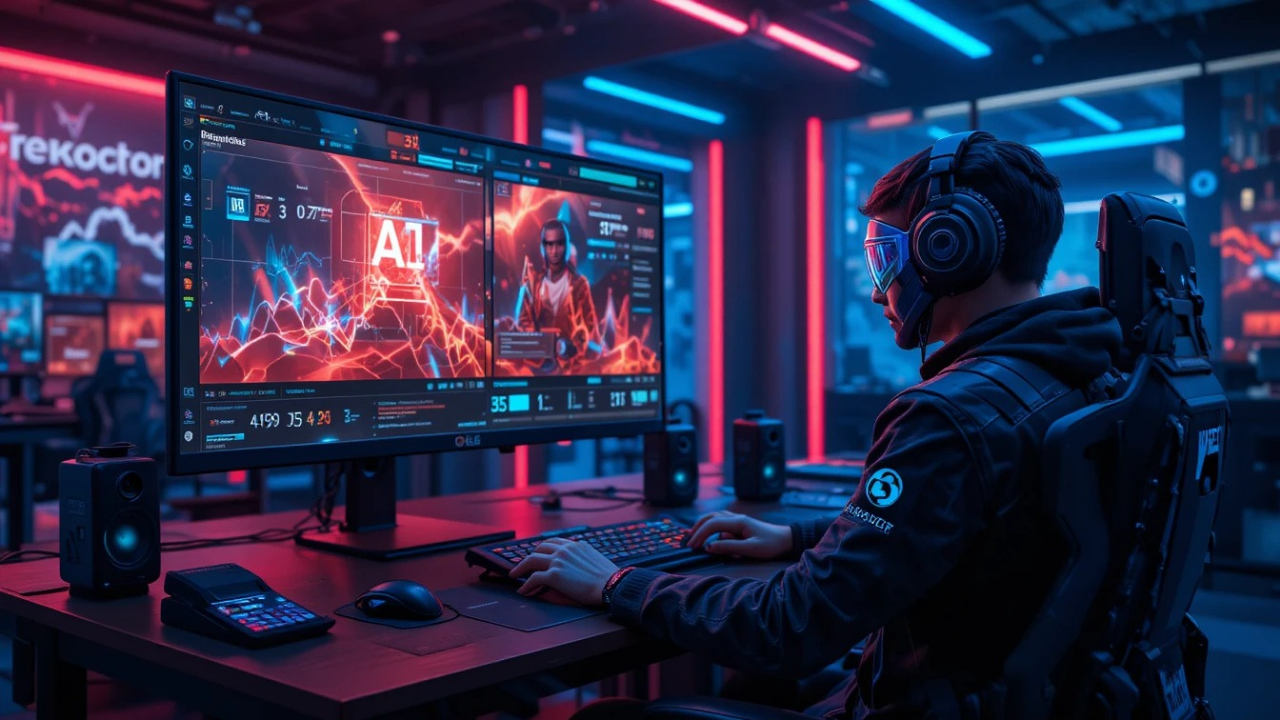
Picture this: you’ve spent hundreds of hours grinding ranked matches, rewatching replays, and still feel like your game isn’t improving the way it should. You know you’re making mistakes, but identifying exactly what they are — and fixing them — is a different challenge altogether.
This is where AI esports training is changing everything.
In 2026, professional esports organizations and everyday competitive gamers alike are turning to AI-powered coaching tools that do what human coaches can’t always do efficiently: analyze thousands of data points per match, spot patterns in your decision-making, and give you personalized feedback in real time.
In this guide, you’ll learn exactly how AI is being used across every level of competitive gaming, which tools are worth your attention, what the results actually look like, and how you can start using AI gaming assistants to sharpen your own skills.
What Is AI Esports Training — and Why Does It Matter Now?
AI esports training refers to the use of machine learning algorithms and data analysis tools to help gamers improve their performance. Rather than relying solely on human coaches or self-review, players use esports training software that automatically processes game data and returns actionable insights.
The reason this matters so much right now comes down to scale and speed. A human coach watching your VOD might catch two or three key mistakes per session. An AI game analysis tool processes every kill, death, positioning error, resource decision, and timing misstep across the entire match — and it can do this in minutes.
Esports performance analytics platforms have become sophisticated enough that they can:
- Break down your decision-making at key moments in the game
- Compare your performance to that of players at higher skill levels
- Track improvement trends over time
- Identify specific mechanics you need to practice
This level of analysis was previously only available to players on professional rosters. Today, it’s accessible to anyone willing to put in the work.
How AI Coaching for Esports Works Behind the Scenes
Understanding the mechanics helps you get more out of these tools.
Data Collection and Processing
Most AI esports platforms pull data directly from game APIs or replay files. Every action you take in a match — your cursor movement, ability usage, resource collection, map positioning — gets logged and timestamped. Machine learning models then analyze this data against enormous datasets of matches from players across all skill levels.
Pattern Recognition
This is where machine learning in esports really shows its value. AI models are trained to recognize patterns that correlate with winning and losing. When your data gets run through the model, it can flag patterns in your play that suggest specific weaknesses — things like overextending during a certain phase of the game, or making poor trade decisions in specific scenarios.
Personalized Feedback
Unlike generic coaching advice, a well-built AI gaming coach tailors its feedback to your play style and your rank. The suggestions you receive are based on what players at your level need to change to move up, not a one-size-fits-all list of tips.
The Most Valuable AI Tools for Competitive Gamers in 2026
The ecosystem of AI esports coaching tools has grown significantly. Here’s a breakdown of the main categories and what they offer.
AI Aim Trainers
Aim training has been around for years, but AI-powered aim trainers have made the category far more useful. Traditional aim trainers give you static drills. AI aim trainers adapt to your specific weaknesses in real time.
Tools like Aimlabs (which has integrated adaptive AI difficulty) track your flick accuracy, tracking consistency, and reaction time — then generate drills specifically targeting your weakest areas. Rather than spending 30 minutes on a playlist that’s 80% irrelevant to your actual gaps, you train the exact skills holding you back.
Real-Time Game Analysis Tools
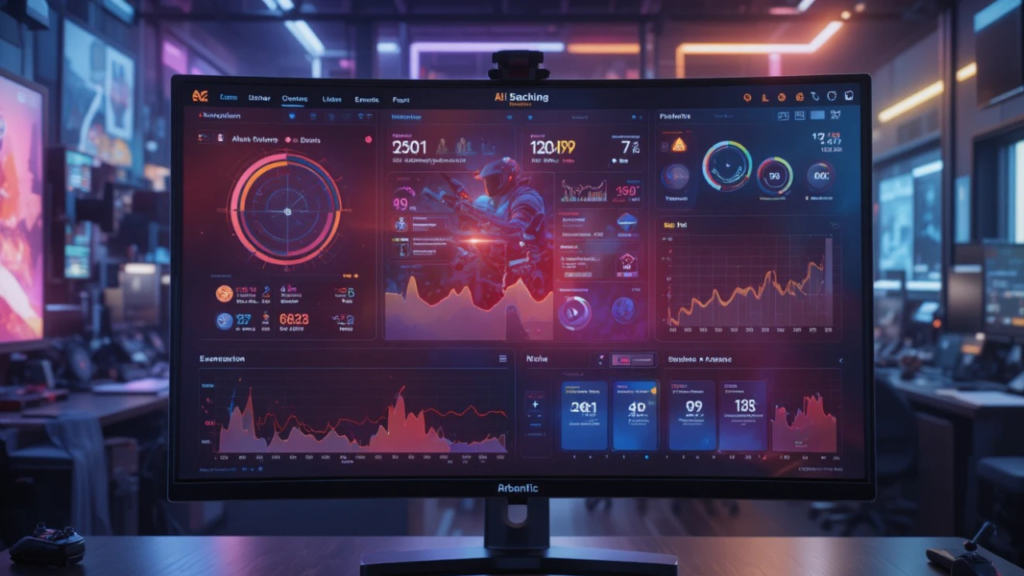
For games like League of Legends, Valorant, CS2, and Dota 2, platforms have developed overlays and post-game analysis dashboards that sit on top of your match data.
Mobalytics, for example, uses a proprietary performance index to score your gameplay and surface the top two or three things you should work on that week. The platform connects your in-game data to a structured improvement plan, which reduces the problem most players face — knowing they need to get better but not knowing where to focus.
For CS2 players, tools like FACEIT’s built-in AI analytics and third-party platforms like Leetify break down your positioning, utility usage, economy decisions, and clutch performance in ways that pure stats can’t capture.
AI Strategy Analysis for Esports Teams
At the professional and semi-professional level, AI strategy analysis has become a core part of team preparation. These tools help coaches and analysts review opponents’ patterns, predict drafting tendencies, and identify map-specific vulnerabilities.
Software used by organizations analyzes thousands of professional matches to surface tendencies — for example, identifying that a particular team tends to force aggressive plays after losing three rounds in a row, or that a specific player almost always takes the same angle in a given situation. This kind of AI strategy analysis for esports gives teams a real edge in preparation.
AI Gaming Assistants and Coaches
Some platforms are now offering conversational AI coaching — think of it like having a knowledgeable teammate available around the clock. You can ask specific questions about decision-making scenarios, get explanations of meta shifts, or request feedback on a particular moment from your last game.
These AI gaming assistants don’t replace a skilled human coach, but they fill a gap that’s always existed: most players don’t have access to coaching at all, and even those who do typically get one session per week. An AI assistant is available after every single session.
Esports Performance Analytics: What the Data Actually Shows
The measurable impact of AI-powered gaming training is becoming increasingly clear.
Players using structured AI feedback tools consistently report faster rank progression compared to those relying on self-review alone. The reason isn’t that the AI is magic — it’s that most players spend their improvement time on the wrong things. They focus on mechanics they enjoy practicing rather than the specific weaknesses costing them the most.
Esports performance analytics platforms address this by surfacing what’s actually causing losses. In many cases, players discover their biggest problem isn’t mechanical at all — it’s decision-making timing, resource prioritization, or communication habits.
For aspiring professionals, this data-driven approach has become something close to a requirement. Organizations now look for players who understand their own performance data and can articulate how they’re improving. Showing up to a tryout with a clear picture of your strengths, weaknesses, and improvement trajectory signals a level of self-awareness and coachability that raw talent alone doesn’t communicate.
How to Use AI Training for Competitive Gaming — A Practical Framework
Getting started with AI esports training doesn’t require a professional setup. Here’s a simple framework that works at any level.
Step 1: Pick One Game and One Platform Spreading yourself across multiple AI tools creates noise. Choose the platform that has the deepest integration with your primary game and commit to it for at least a month.
Step 2: Set a Specific Focus Area Each Week Let the AI surface your top issues, then pick one to address that week. Trying to fix everything at once results in fixing nothing. One focused improvement per week compounds quickly over a season.
Step 3: Practice with Purpose Use your AI aim trainer or skill drills to directly address the weakness you identified. Passive play doesn’t build skills efficiently — deliberate practice does.
Step 4: Review the Data After Every Session Ten minutes of data review after each session is more valuable than an hour of unfocused grinding. Confirm whether you made progress on your focus area, and look for any emerging patterns.
Step 5: Revisit Your Focus Monthly After four weeks, pull your trend data and evaluate what’s changed. This monthly review keeps your improvement plan current and motivates continued effort by showing you concrete progress.
The Limits of AI — What It Can’t Replace
To use AI esports coaching tools effectively, it’s worth being honest about what they don’t do well.
AI is excellent at identifying what you’re doing wrong. It’s less effective at explaining the why in a way that leads to genuine understanding, especially for complex, contextual decisions. A human coach who’s played at a high level can often explain a decision in a way that clicks immediately because they understand the game from the inside.
AI also struggles with the mental side of competitive gaming — managing tilt, building team communication habits, and staying consistent under pressure. These are areas where sports psychology and human mentorship still have a clear edge.
The most effective setups in 2026 combine AI gaming performance improvement tools for data and pattern recognition with human coaching for context, mindset, and game sense development. You don’t have to choose one or the other.
FAQ: AI Esports Training
What is the best AI esports training tool for beginners? For beginners, Mobalytics (for MOBA and FPS games) is one of the most accessible options because it translates complex data into plain-language suggestions. Aimlabs is a strong starting point for improving aim mechanics. Both offer free tiers that provide meaningful value without requiring a subscription.
Can AI coaching for esports replace a human coach? Not entirely, but it fills a significant gap. AI coaching tools are available 24/7, are highly data-driven, and scale to any skill level. Human coaches add contextual understanding, mental coaching, and the nuance that comes from lived competitive experience. The two work best together.
How long does it take to see improvement using AI gaming training? Most players who follow a structured plan see measurable rank improvement within four to eight weeks. The speed depends on how consistently you apply the feedback, how much you play, and whether you’re practicing deliberately or just grinding games.
Is AI esports training software worth the cost? For serious competitive players, yes. The time saved by identifying your actual weaknesses — rather than guessing — is significant. Many platforms offer free tiers with enough features to evaluate whether the tool is a fit before paying.
Does AI strategy analysis work in team-based games? Absolutely. In fact, team-based games like CS2, Valorant, and League of Legends are where AI strategy analysis adds the most value because there are so many interacting variables. AI tools can analyze team coordination, role-specific performance, and opponent tendencies in ways that would take a human analyst much longer to surface.
Conclusion
AI esports training has moved well past the experimental phase. In 2026, it’s a practical, accessible toolkit that serious competitive gamers use to find their weaknesses, fix them faster, and track their progress with real data.
Whether you’re grinding ranked solo queue, preparing for a tournament, or building toward a professional career, the gap between players who use AI coaching tools and those who don’t is widening. The tools are better than ever, the barrier to entry is low, and the feedback they provide is genuinely useful.
Start with one platform, focus on one improvement at a time, and be consistent. That’s the formula — and AI makes it easier to follow than it’s ever been.
Ready to level up your competitive game? Choose one AI esports platform this week, connect it to your account, and commit to four weeks of data-driven practice. The results might surprise you.
Claude Code Commands

Founder of Aivexify
Himanshu Deora is an AI tools researcher and digital publisher who tests AI software, automation tools, and emerging technology trends and AI content creator passionate about sharing helpful guides, AI tools, software tutorials, and the latest digital trends. Through Aivexify, he helps readers discover smart technology, productivity tools, and practical online resources in a simple and easy-to-understand way.