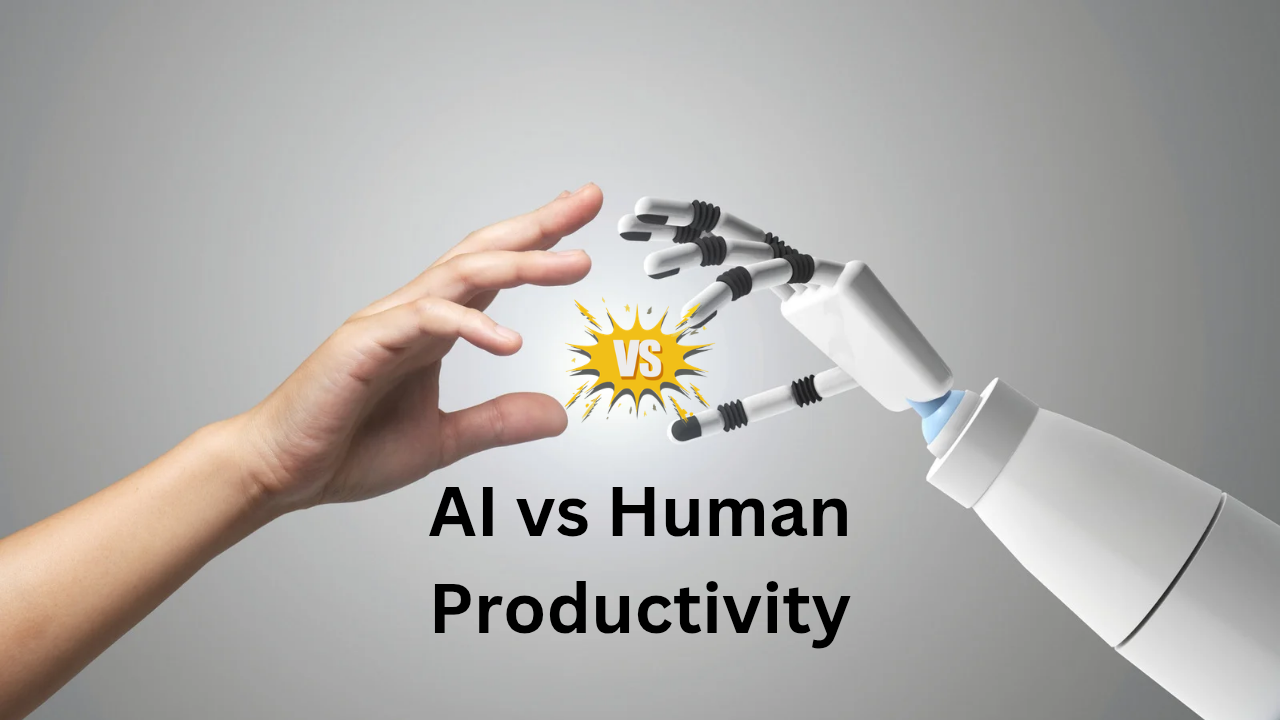
For centuries, human productivity has been the driving force behind innovation, economic growth, and societal progress. From the agricultural revolution to the industrial era and the digital age, people have continuously sought ways to work faster, smarter, and more efficiently.
Today, the world stands at another transformative moment in history.
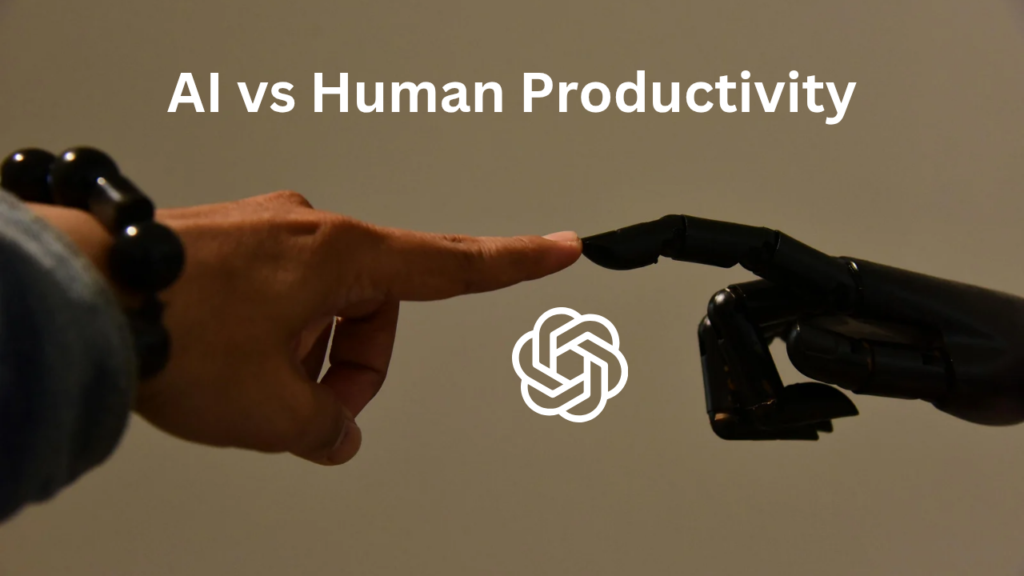
Artificial intelligence is rapidly reshaping the way work is performed across industries. Tasks that once required hours of manual effort can now be completed in seconds with the help of intelligent systems. Businesses are using AI to analyze massive datasets, automate workflows, assist decision-making, and optimize processes in ways that were unimaginable just a decade ago.
This technological shift has sparked an important question: How does AI productivity compare to human productivity?
The debate surrounding AI vs Human Productivity is not simply about speed or efficiency. It is about understanding the unique strengths of both artificial intelligence and human intelligence, and how these strengths can coexist in the modern workplace.
While AI systems excel at processing large volumes of information and performing repetitive tasks without fatigue, humans possess creativity, emotional intelligence, ethical judgment, and the ability to adapt to complex situations.
Rather than viewing AI as a replacement for human work, many experts now see it as a powerful partner that can enhance human productivity.
The relationship between AI and human productivity is redefining industries such as healthcare, marketing, finance, education, and technology. Businesses that understand how to combine AI capabilities with human insight are likely to achieve the greatest success in the future economy.
In this comprehensive guide, we will explore the evolving relationship between AI vs Human Productivity, examining their strengths, limitations, real-world applications, and the future of collaboration between humans and intelligent machines.
By understanding these dynamics, individuals and organizations can better prepare for a future where productivity is shaped by both human creativity and artificial intelligence.
What Is Human Productivity?
Human productivity refers to the ability of individuals or teams to produce meaningful work, solve problems, and generate value using their skills, knowledge, and creativity.
Historically, productivity improvements have come from better tools, improved processes, and technological advancements. However, human productivity remains deeply rooted in qualities that machines struggle to replicate.
These qualities include:
- Creativity and imagination
- Emotional intelligence
- Ethical reasoning
- Strategic thinking
- Complex problem-solving
Humans are capable of understanding context, emotions, and social dynamics. These abilities allow people to collaborate effectively, innovate new ideas, and adapt to unpredictable environments.
In the discussion of AI vs Human Productivity, these human strengths play a critical role in maintaining balance within modern workplaces.
What Is AI Productivity?
AI productivity refers to the efficiency gained by using artificial intelligence systems to perform tasks that would otherwise require human effort.
AI systems are particularly effective at tasks involving:
- Data analysis
- Pattern recognition
- Automation
- Predictive modeling
- Process optimization
Unlike humans, AI systems can process vast amounts of information almost instantly. They do not experience fatigue, distractions, or emotional stress.
This capability allows AI tools to dramatically increase productivity in areas that require repetitive or data-heavy work.
For example, AI systems can analyze millions of financial transactions in seconds, identify potential fraud, and generate detailed reports faster than human analysts.
This efficiency is one reason the discussion around AI vs Human Productivity has become central to modern business strategies.
Key Differences Between AI and Human Productivity
Understanding the differences between AI and human productivity helps clarify why both are essential in modern organizations.
| Factor | AI Productivity | Human Productivity |
| Speed | Extremely fast data processing | Slower but thoughtful |
| Creativity | Limited creativity | Highly creative |
| Emotional Intelligence | None | Strong emotional awareness |
| Adaptability | Limited outside training data | Highly adaptable |
| Consistency | Very consistent | May vary due to fatigue |
| Ethical Judgment | Requires human oversight | Natural ethical reasoning |
This comparison highlights the fundamental contrast in the AI vs Human Productivity debate.
AI excels at efficiency and consistency, while humans excel at creativity, empathy, and complex decision-making.
Strengths of AI Productivity
Artificial intelligence offers several advantages that significantly enhance productivity.
1. Speed and Efficiency
AI systems can perform calculations and analyze datasets far faster than humans.
Tasks that once required weeks of analysis can now be completed in minutes.
2. Automation of Repetitive Work
AI is particularly effective at automating repetitive tasks such as data entry, scheduling, and document processing.
This allows employees to focus on more meaningful work.
3. Data-Driven Insights
AI tools can identify patterns and trends in data that might be difficult for humans to detect.
These insights help businesses make better decisions.
4. Continuous Operation
Unlike humans, AI systems can operate 24 hours a day without fatigue.
This capability dramatically increases operational efficiency.
In the conversation about AI vs Human Productivity, these strengths highlight why AI is becoming increasingly valuable in modern workplaces.
Strengths of Human Productivity
Despite the impressive capabilities of AI, humans still possess qualities that machines cannot replicate.
Creativity
Humans generate original ideas, artistic expression, and innovative solutions.
Creativity remains one of the strongest advantages of human productivity.
Emotional Intelligence
Humans understand emotions, relationships, and social dynamics.
These abilities are essential for leadership, negotiation, and teamwork.
Ethical Decision-Making
Humans can evaluate moral implications and consider ethical consequences when making decisions.
AI systems lack this deep ethical understanding.
Adaptability
Humans can quickly adjust to unexpected changes or new environments.
AI systems typically require retraining when conditions change.
These strengths demonstrate why the AI vs Human Productivity discussion should focus on collaboration rather than competition.
Real-World Examples of AI and Human Productivity
The balance between AI and human productivity can already be seen across multiple industries.
Healthcare
AI systems analyze medical images and detect patterns in patient data.
Doctors then use these insights to make informed treatment decisions.
Marketing
AI tools analyze customer behavior and optimize advertising campaigns.
Human marketers create creative strategies and brand messaging.
Finance
AI detects fraudulent transactions and analyzes financial risks.
Human analysts interpret these insights and develop long-term investment strategies.
These examples show how the partnership between AI and humans can create powerful productivity gains.
The Role of AI in Enhancing Human Productivity
Rather than replacing humans, AI often acts as a productivity amplifier.
By automating routine tasks, AI allows people to focus on activities that require creativity, strategic thinking, and emotional intelligence.
For example:
- Writers use AI tools to generate outlines and research ideas.
- Designers use AI to speed up visual creation.
- Developers use AI assistants to write and debug code.
These collaborations demonstrate how AI vs Human Productivity can evolve into AI plus human productivity.
Challenges in the AI vs Human Productivity Debate
Despite its benefits, AI also presents challenges that must be addressed responsibly.
Job Displacement Concerns
Automation may replace certain repetitive jobs.
However, history shows that new technologies often create new job opportunities.
Ethical Risks
AI systems may inherit biases from training data.
Human oversight is necessary to ensure fairness and accountability.
Overdependence on Technology
Excessive reliance on AI could reduce human problem-solving skills.
Organizations must balance automation with human expertise.
Understanding these challenges helps organizations navigate the future of AI vs Human Productivity responsibly.
The Future of AI and Human Collaboration
The future of work will likely involve deep collaboration between humans and AI systems.
Experts predict that the most productive organizations will combine:
- AI’s computational power
- Human creativity and leadership
In this future, AI will handle repetitive tasks while humans focus on innovation and strategic decision-making.
The discussion around AI vs Human Productivity may eventually shift toward AI-augmented human productivity, where intelligent systems enhance human capabilities rather than replace them.
How Individuals Can Thrive in an AI-Driven Workplace
To succeed in a world shaped by AI vs Human Productivity, individuals should focus on developing uniquely human skills.
These include:
- Creativity and innovation
- Emotional intelligence
- Critical thinking
- Leadership and communication
Learning how to work alongside AI tools will become an essential skill for future professionals.
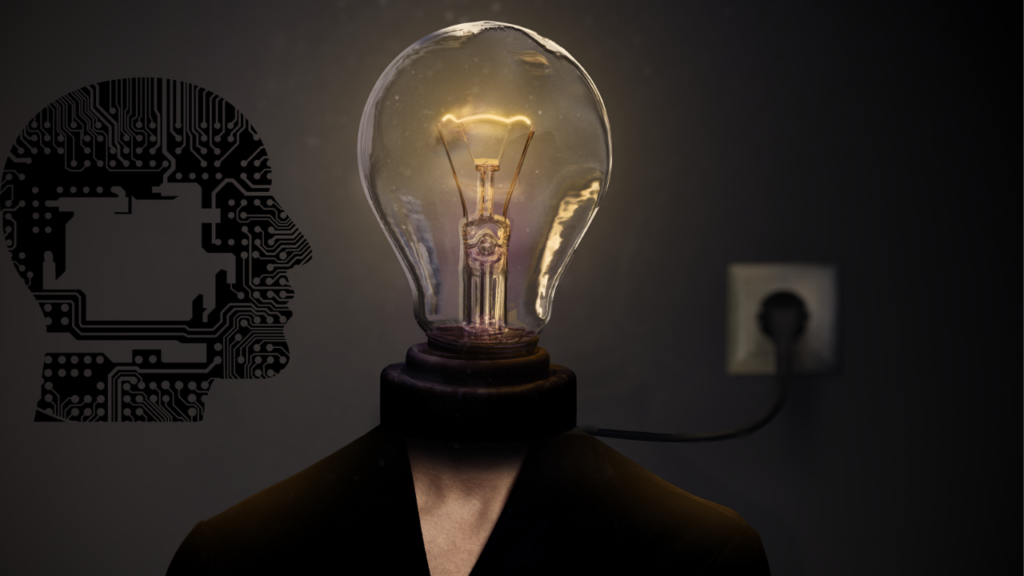
Those who embrace AI as a partner rather than a threat will be better positioned to succeed in the evolving workplace.
Conclusion: A Partnership That Defines the Future
The debate around AI vs Human Productivity often frames the relationship between artificial intelligence and human work as a competition.
But in reality, the future of productivity is not about choosing one over the other.
AI and humans possess fundamentally different strengths.
Artificial intelligence excels at speed, data analysis, and automation. Humans excel at creativity, empathy, ethical reasoning, and complex decision-making.
When these strengths are combined, the result is a powerful partnership that can unlock extraordinary levels of productivity.
Organizations that embrace this collaboration will be able to innovate faster, solve problems more effectively, and adapt to the rapidly changing demands of the global economy.
The future of work will not belong solely to machines or to humans.
It will belong to those who learn how to harness the best of both worlds.
In this evolving landscape, the true question is no longer AI vs Human Productivity.
The real opportunity lies in understanding how artificial intelligence can empower human potential and create a more productive, innovative, and meaningful future for everyone.