
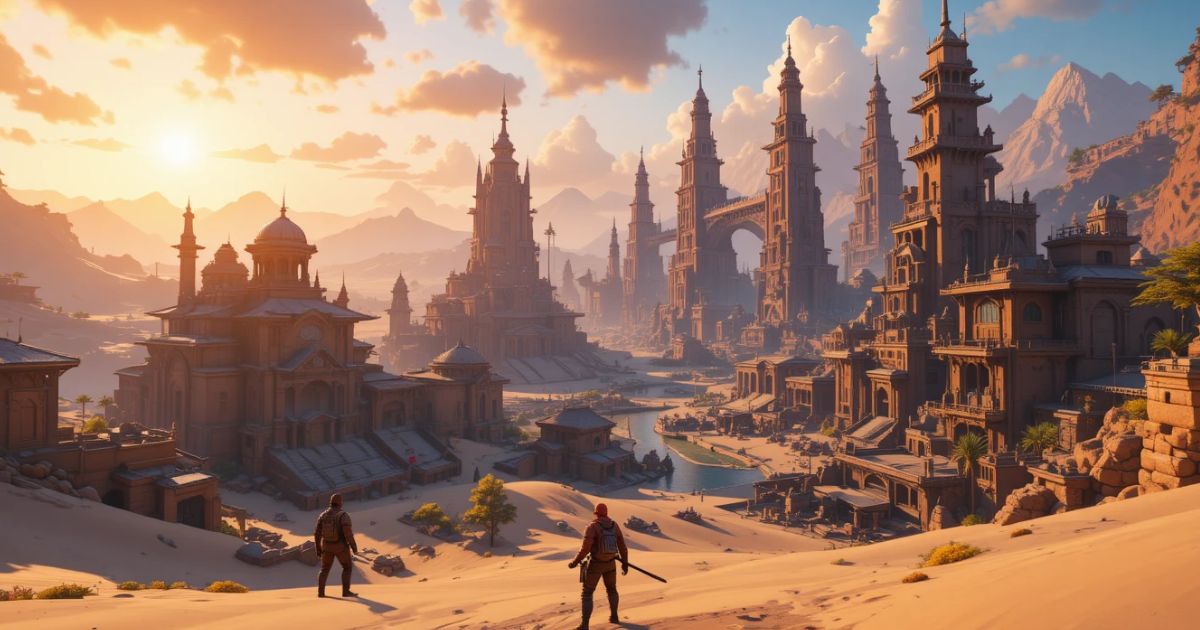
You log in after a stressful week, heart still racing from real life. The village you helped defend months ago looks different. The blacksmith—whose daughter you rescued from bandits—spots you from across the square. He doesn’t just nod. He smiles, calls you by the nickname you earned during that desperate night, and quietly slips you a family heirloom weapon because “you’ve proven trustworthy.” Down the road, a rival trader you short-changed last season has hired better guards and spread rumors. The ecosystem feels off too: overhunting has thinned the local deer, forcing wolves closer to town.
This isn’t a scripted cutscene. The world is reacting to you. In 2026, sandbox games have crossed a quiet threshold. They no longer just give you freedom. They give you consequences—social, emotional, and systemic.
Players are noticing something strange: these worlds stop feeling like software and start feeling socially alive. You don’t merely complete quests anymore. You build reputations that matter. This shift explains why AI sandbox games are exploding in popularity right now.
In this deep dive, you’ll explore what makes them special, why 2026 feels like a genuine cultural turning point, the best experiences available, the tech behind the magic, the very real problems, and what comes next. Let’s dig in.
Why Players Are Craving Reactive Worlds
We’re exhausted. For years, big-budget open-world games followed the same formula: massive maps dotted with identical question marks, Ubisoft-style tower-climbing fatigue, and NPCs with the personality of cardboard cutouts reciting the same three lines. Younger gamers, raised on personalized algorithms everywhere from TikTok to Spotify, expect games to adapt to them—not the other way around.
Scripted experiences feel outdated. Players want dynamic open worlds where choices ripple outward, creating emergent narratives that feel personally theirs. AI sandbox games deliver exactly that: worlds that remember, adapt, and sometimes push back.
What Is an AI Sandbox Game?
At its core, a sandbox game hands you tools and a playground, then steps back. Traditional examples like Minecraft emphasized pure creativity and survival. Open-world games focus on exploration within a large space, often with stronger narrative rails.
AI-enhanced sandboxes add intelligence on top. Procedural systems generate variety. Dynamic ecosystems evolve. Most importantly, AI NPCs develop memory, relationships, and adaptive behaviors. The result? Worlds where simple rules create complex, surprising stories.
Pioneers include Minecraft (still unmatched for building), No Man’s Sky (a universe that keeps evolving), and RimWorld (where drama emerges from psychology).
Why 2026 Feels Different
Hardware has caught up. Powerful local AI chips, cloud simulation, and large language models (LLMs) now run sophisticated behaviors without melting your GPU. The post-2023 AI boom accelerated everything. Player expectations shifted dramatically—people want companions, not vending machines.
GDC 2026 was dominated by talks on AI shaping worlds, movement, and interactions. We’re seeing the first wave of truly responsive simulations. Sandbox games are leading because their systems-based nature pairs perfectly with AI.
How AI Is Transforming Sandbox Games
Players notice the shift in subtle, human ways. An NPC might refuse a trade not because of a flag, but because they remember you stole from their cousin. Reputation systems now carry emotional weight.
Procedural worlds have grown smarter, generating context-aware AI-generated quests and dynamic events. Environments respond: over-farmed land degrades, alliances shift based on collective player behavior.
The real magic lies in emergent gameplay—systems colliding in unexpected ways. A single bad decision snowballs into unforgettable drama. This creates procedural storytelling that feels organic, turning players into co-authors of their legends.
Personalization goes deeper too. AI adjusts difficulty, dialogue, and even narrative tone to your playstyle. Aggressive conqueror? The world toughens and fears you. Diplomat? New paths open through conversation.
Best AI Sandbox Games in 2026
Minecraft
Why It Still Matters: Over a decade old and more vibrant than ever. AI / Sandbox Features: Advanced procedural generation, improved mob AI, and a massive mod ecosystem that adds smart villagers and simulations. Memorable Moments: Building an automated farm only for a modded villager uprising to burn it down because you neglected their happiness. Best For: Creative builders, chaotic multiplayer, survival purists. Weaknesses: Base game can feel dated without mods or shaders. Platforms: PC, Console, Mobile.
No Man’s Sky
Why It Still Matters: Hello Games continues free updates that keep the universe feeling alive. AI / Sandbox Features: Enhanced creature AI with herding and natural behaviors, dynamic economies, and procedural events. Ongoing improvements to interactions make exploration rewarding. Memorable Moments: Landing on a planet where creatures have adapted to your previous hunting patterns, forcing new strategies. Best For: Solo explorers, base builders, wonder-seekers. Weaknesses: Core combat still divides opinions. Platforms: PC, Console.
RimWorld
Why It Still Matters: The masterclass in emergent drama. AI / Sandbox Features: Deep pawn psychology, multiple AI storytellers, and adaptive threats. Mods push this even further. Memorable Moments: One colonist’s mental breakdown spirals into a tragic betrayal that ruins 40 hours of progress—yet feels perfectly earned. Best For: Strategy players who crave human (and inhuman) drama. Weaknesses: Steep learning curve and minimalist graphics. Platforms: PC (excellent mod support).
Palworld
AI / Sandbox Features: Smart Pals that handle base tasks and combat with personality. Dynamic survival systems. Best For: Action collectors and multiplayer survival fans. Weaknesses: Occasional optimization hiccups. Platforms: PC, Console.
Dwarf Fortress
Why It Still Matters: Unparalleled simulation depth. Memorable Moments: A forgotten artifact triggers a century-old grudge between fortress families. Best For: World-building obsessives. Platforms: PC.
Other strong contenders: Kenshi (brutal reactive factions), ARK: Survival Ascended (improved creature AI), and Grand Theft Auto V (enduring chaos with responsive NPCs). Emerging AI-native experiences are also pushing boundaries.
The Technology Powering These Living Worlds
Behind the curtain, these games resemble miniature civilizations running on silicon.
Procedural generation creates near-infinite variety, while simulation systems track economies, ecosystems, and physics that persist even offline. Behavior trees and reinforcement learning let AI NPCs learn from interactions. LLMs power natural dialogue and procedural storytelling.
The wonder comes from watching simple rules birth complexity—like watching life emerge in a petri dish. It feels almost magical.
Can AI Sandbox Games Become Too Real?
This is the uncomfortable question. Players form genuine emotional attachments to AI companions. Persistent memory creates parasocial bonds that blur digital and real. In an increasingly lonely world, are we outsourcing friendship to algorithms? The line between entertainment and emotional dependency is thinning.
The Dangerous Illusion of Infinite Content
Here’s the nuanced truth: more isn’t always better. AI-generated worlds can feel hollow despite their scale. Procedural boredom sets in when variety lacks meaning. Handcrafted moments still carry emotional weight that pure generation often misses. Quantity can dilute quality, creating vast but ultimately empty experiences. Developers must balance scale with soul.
Other issues persist: repetitive dialogue, technical hiccups in massive simulations, high server costs, and ethical questions around AI training and moderation.
What the Future Holds
Imagine logging in to find your AI companion has evolved a personality arc based on your shared adventures. Entire civilizations generating their own histories. Real-time evolving worlds. Sophisticated AI-driven economies. The simulation never truly stops.
Final Verdict
For decades, sandbox games asked one simple question: “What do you want to build?” In 2026, they’re asking something far more interesting: “Who do you want to become inside this world—and how will it change you?”
Next-gen sandbox games reward curiosity, patience, and creativity. They matter most to players tired of being led by the hand. 2026 feels like the turning point where digital playgrounds become living simulations—flawed, surprising, and deeply human in their reactivity.
Start with RimWorld if you crave drama, or Minecraft if you want pure creation. The sandbox is no longer passive. It’s waiting for your next move—and it’s ready to respond.
FAQ
What is an AI sandbox game? A freedom-focused game enhanced by intelligent systems for adaptive AI NPCs, dynamic open worlds, and emergent narratives.
Are AI sandbox games better than traditional open-world games? They excel in replayability and personalization, though hand-crafted stories still shine in traditional titles.
Which sandbox game has the smartest NPCs? RimWorld leads with its psychological depth.
Are AI-generated worlds infinite? Practically yes, but meaningful depth still requires thoughtful design.
Google Gemini AI Explained

Founder of Aivexify
Himanshu Deora is an AI tools researcher and digital publisher who tests AI software, automation tools, and emerging technology trends and AI content creator passionate about sharing helpful guides, AI tools, software tutorials, and the latest digital trends. Through Aivexify, he helps readers discover smart technology, productivity tools, and practical online resources in a simple and easy-to-understand way.