
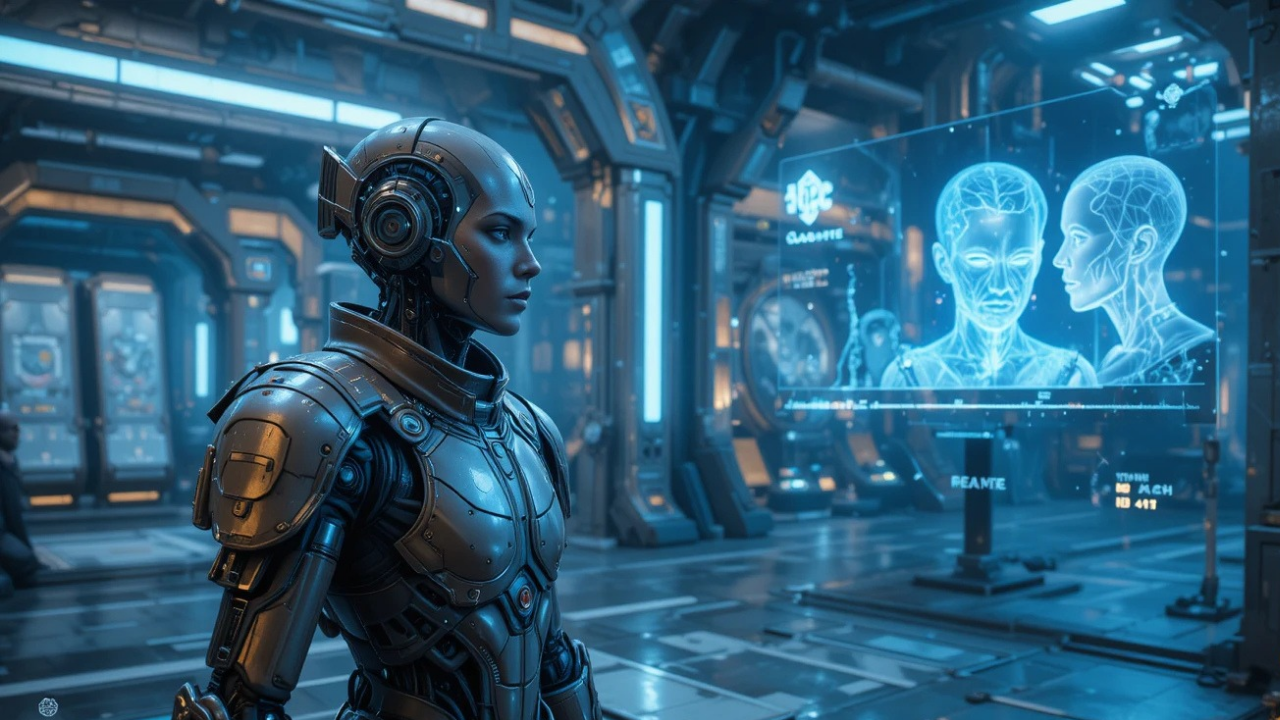
Imagine returning to a game months after your last session.
You walk into a familiar village and spot a blacksmith you once cheated during a trade. Instead of greeting you with the same recycled dialogue, he remembers exactly what happened. His prices are higher. His trust is gone. Nearby villagers have heard the story, and some refuse to do business with you altogether.
Nothing was scripted.
No developer manually wrote this interaction.
The world remembered.
This is the promise of AI NPCs That Remember Players—a new generation of game characters capable of recalling past conversations, tracking relationships, and adapting their behavior based on shared experiences. Rather than treating every encounter as a fresh start, these NPCs build a history with players that can influence dialogue, quests, reputations, and even the wider game world.
For decades, NPCs relied on scripted dialogue trees, quest flags, and limited state variables. While these systems created memorable experiences, they lacked something fundamental to real relationships: memory. Recent advances in large language models (LLMs), retrieval-augmented generation (RAG), vector databases, and AI memory architectures are finally changing that.
Developers can now create characters that remember who you are, what you’ve done, and how you’ve treated them. The result is a gaming experience that feels less like interacting with scripted code and more like living in a world populated by evolving digital personalities.
What Are AI NPCs That Remember Players?
AI NPCs with persistent memory store, retrieve, and act on information from past interactions. Unlike traditional NPCs that loop the same lines, these characters build continuity.
Key capabilities include:
- Remembering specific player choices and conversations
- Adapting attitudes, trust levels, and relationships dynamically
- Tracking reputation across the world
- Referencing shared experiences naturally
- Evolving personal storylines over time
Interactions shift from one-off exchanges to ongoing relationships. Players aren’t just completing quests—they’re building (or burning) connections that matter.
Why Traditional NPCs Feel Limited
Classic systems use dialogue trees, reputation meters, and event triggers. They work, but they break immersion easily. Save an NPC’s family today, and weeks later they might greet you like a stranger.
As players experience more dynamic AI in daily life (chatbots, assistants, etc.), expectations have risen. Static characters now feel outdated.
The Technology Behind Persistent NPC Memory
Several technologies work together:
Large Language Models (LLMs): Generate natural, context-aware dialogue on the fly instead of pulling from fixed options.
Vector Databases: Store memories as embeddings for semantic retrieval. An NPC can connect a player mentioning a “lost sword” to earlier conversations, emotional context, and ownership history—even with different wording.
Retrieval-Augmented Generation (RAG): Pulls relevant long-term memories before generating responses, ensuring historical consistency beyond the immediate chat window.
Relationship & Emotional Models: Track metrics like trust, fear, loyalty, or rivalry. These values shift based on accumulated memories, creating emotional continuity.
Types of NPC Memory Systems
- Episodic Memory: Specific events (“You saved me from bandits last winter” or “You stole from my shop”).
- Semantic Memory: General knowledge (“You’re a powerful mage” or “You own land in this region”).
- Emotional Memory: Feelings like gratitude, anger, or admiration that color future interactions.
- Social Memory: NPCs gossip. Your reputation spreads organically through the world.
Benefits of Memory-Driven NPCs
- Deeper Immersion: Actions have lasting consequences that ripple through the world.
- Emergent Storytelling: Unscripted narratives arise from player choices—no designer could predict them all.
- Stronger Emotional Bonds: Players form real attachments to characters who remember them.
- Higher Replayability: Relationships and world states vary dramatically across playthroughs.
Real-World Examples in 2026
This isn’t just theory anymore:
- Wanderfolk (Steam launch May 2026): A medieval RPG where every NPC uses persistent vector memory, reputation systems, and gossip networks. Your actions spread socially, with real consequences.
- Inworld AI and Convai: Leading platforms for developers. They enable personality profiles, long-term memory, goals, and adaptive responses. Many indie and experimental projects integrate them with Unity and Unreal Engine.
- Jenova.ai’s Roleplay Game Master: Features unlimited persistent memory across sessions, letting NPCs reference events from months earlier without scripting.
- Research Projects: Stanford-inspired AI Town simulations and systems like MemoryRepository (2026 research) demonstrate agents that summarize, forget, and maintain human-like long-term recall.
Independent developers are rapidly prototyping these in game engines, giving a preview of mainstream RPGs to come.
Major Challenges Developers Face
Persistent memory isn’t without hurdles:
- Memory Overload & Management: Storing everything is impractical. Solutions include summarization, importance weighting, and realistic memory decay (inspired by human forgetting).
- Consistency Issues: AI can generate contradictions over long periods. Hybrid systems and validation layers help maintain narrative coherence.
- Computational Costs: Retrieval, storage, and inference add up, especially with hundreds or thousands of NPCs. Optimization (edge computing, on-device small models) is active area of work.
- Player Abuse: Players test boundaries with exploits or toxic behavior. Developers need robust moderation without breaking immersion.
Designing Effective NPC Memory Systems

Best practices emerging in 2026:
- Prioritize meaningful events over trivial chatter.
- Summarize old memories into concise knowledge.
- Weight memories by emotional or narrative impact.
- Implement gradual decay for realism and performance.
The Future of AI NPCs
By the mid-2030s, we could see NPCs that:
- Maintain relationships across multiple game sessions or even sequels.
- Develop unique personalities shaped purely by experience.
- Generate dynamic quests and social networks independently.
Games may evolve from authored stories into living simulations where every player’s journey feels singular. The line between “scripted character” and “digital personality” will blur.
Final Thoughts
AI NPCs that remember players represent a fundamental shift in how game worlds are built. Instead of repeating scripted lines, these characters can develop relationships, recall past interactions, and respond to players in ways that feel more natural and meaningful.
While challenges around memory management, consistency, and cost still exist, the technology is advancing rapidly. What once seemed like science fiction is becoming a practical reality for game developers.
As persistent memory systems mature, games may evolve from static experiences into living worlds shaped by shared history and genuine consequence.
The future of gaming isn’t just smarter NPCs—it’s NPCs that remember.
Claude vs ChatGPT in 2026

Founder of Aivexify
Himanshu Deora is an AI tools researcher and digital publisher who tests AI software, automation tools, and emerging technology trends and AI content creator passionate about sharing helpful guides, AI tools, software tutorials, and the latest digital trends. Through Aivexify, he helps readers discover smart technology, productivity tools, and practical online resources in a simple and easy-to-understand way.