Meta Description: Discover the 10 best AI NPC conversation systems for game developers in 2026. Compare features, pricing, and use cases to find the right AI dialogue system for your game.
Why NPC Conversations Are the Next Frontier in Gaming
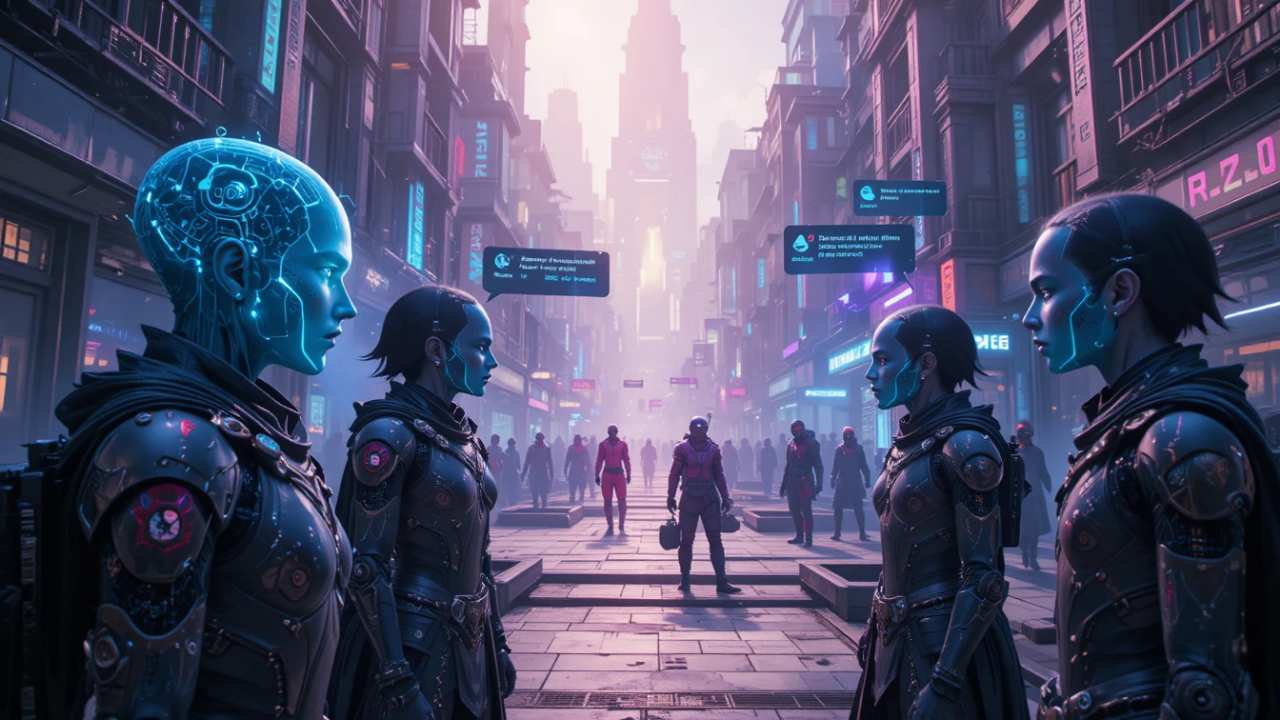
Picture this — you’re deep in an open-world RPG. You approach a tavern keeper and ask about the bandits attacking the northern road. Instead of hearing the same three canned responses you’ve heard for the past six hours, the NPC pauses, remembers you helped save her daughter in Act One, and leans in with genuine intel specific to your playthrough.

That’s not a fantasy anymore. In 2026, AI NPC conversation systems have matured to the point where game developers — from solo indie creators to AAA studios — are weaving them into their production pipelines.
In this guide, you’ll learn:
- What AI NPC dialogue systems actually are (and how they work under the hood)
- The 10 best platforms available for game developers in 2026
- How to choose the right system for your game’s genre, budget, and scale
- Answers to the most common questions developers have before committing
Whether you’re building a narrative RPG, a training simulation, or a live-service multiplayer world, there’s an AI dialogue generation solution in this list for you.
What Is an AI NPC Conversation Systems?
An AI NPC conversation systems is a software framework that uses large language models (LLMs), natural language processing (NLP), or neural dialogue networks to generate dynamic, contextually aware speech and responses for non-player characters in games.
Unlike traditional branching dialogue trees — where every possible response is hand-written and hard-coded — AI-powered NPCs can respond to player input in real time, remember past interactions, adapt their tone based on relationship status, and generate lines that were never explicitly scripted.
The core components of most AI character conversation systems include:
- A language model backbone (often a fine-tuned LLM or smaller distilled model)
- A context/memory layer (short-term session memory + long-term persistent state)
- A personality and constraint engine (keeps NPCs in-character and lore-consistent)
- A speech synthesis or text output pipeline (connecting dialogue to voice or subtitle systems)
The result is dynamic NPC dialogue that feels genuinely alive — and that’s reshaping player expectations across every genre.
Why Game Developers Are Adopting AI Dialogue Systems in 2026
The shift has been rapid. A few years ago, generative AI NPCs were a demo-room curiosity. Today they’re a competitive differentiator. Here’s why adoption has accelerated:
1. Player expectations have permanently shifted. After several high-profile titles shipped with reactive AI companions, audiences now notice when NPCs feel wooden. Static dialogue trees that were acceptable in 2020 feel dated in 2026.
2. Localization costs are shrinking. AI dialogue generation for games dramatically reduces the cost of writing and recording dialogue across multiple languages, especially for secondary and tertiary characters who previously got minimal lines.
3. Replayability gets a massive boost. When conversations are dynamically generated around player choices, no two playthroughs feel identical. This is a proven retention driver for live-service and roguelite titles.
4. Small teams can punch above their weight. A two-person indie studio using a well-integrated conversational AI for games can deliver NPC depth that would previously have required a full narrative team.
The 10 Best AI NPC Conversation Systems for Game Developers in 2026
1. Inworld AI
Best for: AAA and mid-size studios building character-rich games
Inworld AI remains one of the most mature and full-featured AI NPC dialogue systems on the market. Its Character Engine combines an LLM dialogue core with dedicated layers for personality, memory, emotion, and safety filtering — all tunable through a no-code studio dashboard.
Key Features:
- Deep personality customization with trait-based character profiles
- Long-term and short-term memory management
- Emotion and motivation engine that shifts NPC behavior over time
- Native Unity and Unreal Engine SDK integrations
- Real-time voice synthesis pipeline support
Ideal for: Open-world RPGs, narrative-heavy adventure games, virtual companion experiences
Pricing: Starts with a free developer tier; enterprise pricing on request
2. Convai
Best for: Real-time 3D games needing low-latency AI NPC interaction
Convai has carved a strong niche in AI NPC conversations that demand speed. Its architecture is optimized for real-time, in-engine dialogue where latency is critical — think multiplayer environments or action-RPGs where players can’t wait two seconds for a response.
Key Features:
- Sub-second response latency in optimized configurations
- Persistent memory across sessions
- Multi-character support with NPC-to-NPC communication
- Plugin support for Unity, Unreal, and Roblox
- Backstory and knowledge base uploads for lore-accurate responses
Ideal for: Live-service games, immersive sim titles, Roblox experiences, VR environments
Pricing: Free tier available; paid plans scale with API call volume
3. NVIDIA ACE (Avatar Cloud Engine)
Best for: High-fidelity PC and console games prioritizing visual and audio realism
NVIDIA ACE is a suite rather than a single product — it combines generative dialogue (via Audio2Face integration), real-time voice synthesis, and expressive animation. For developers already in the NVIDIA ecosystem, ACE offers deeply integrated AI-powered NPC experiences that synchronize speech, lip movement, and facial expression.
Key Features:
- Tight integration with NVIDIA Omniverse and RTX pipelines
- Riva-powered speech recognition and synthesis
- Modular — use just the dialogue engine, or the full visual stack
- Designed for high-fidelity character rendering
- On-premise deployment options for studios with data sensitivity requirements
Ideal for: AAA PC/console titles, cinematic RPGs, digital human experiences
Pricing: Contact NVIDIA for enterprise licensing
4. Replica Studios AI
Best for: Indie and mid-size developers who need AI voice + dialogue together
Replica Studios started as an AI voice platform but has evolved into a compelling AI game dialogue system that pairs generative text with emotional voice synthesis. This makes it uniquely appealing for teams who want to handle both writing and voicing NPCs from a single platform.
Key Features:
- 400+ AI voice models with emotional range
- Script-to-character pipeline for rapid prototyping
- Integration with Unreal Engine via plugin
- Batch dialogue generation for secondary characters
- Persistent character voices tied to personality settings
Ideal for: Narrative indie games, VNs with voiced characters, RPG-maker style projects
Pricing: Subscription plans from ~$24/month; studio plans available
5. KoboldAI / KoboldCPP (Self-Hosted)
Best for: Privacy-conscious developers and offline/local deployments
For studios that can’t send dialogue data to third-party cloud servers — think games set in sensitive environments or titles under strict NDA — KoboldCPP provides a powerful self-hosted option. Running open-source LLMs locally, it enables full AI NPC interaction with zero data leaving your infrastructure.
Key Features:
- Fully local — no API calls, no data exposure
- Compatible with Llama, Mistral, Gemma, and other open-weight models
- Custom system prompt engineering for character personas
- No per-token cost — run as many conversations as your hardware supports
- Active open-source community with game-specific fine-tunes available
Ideal for: Privacy-sensitive projects, offline/console ports, budget-conscious teams with capable hardware
Pricing: Free (open source); hardware costs only
6. Charisma.ai
Best for: Narrative-driven games and interactive story experiences
Charisma.ai takes a distinctly story-first approach to dynamic NPC dialogue. Rather than treating NPCs as isolated chatbots, it models entire narrative graphs — so character responses are aware of overarching story state, not just the last few player inputs.
Key Features:
- Narrative graph editor for story-aware AI dialogue
- Character mood and relationship tracking across a full story arc
- Built-in conversation testing and debugging tools
- REST API and Unity SDK
- Designed explicitly for interactive drama and narrative games
Ideal for: Interactive fiction, visual novels with branching AI dialogue, educational narrative games
Pricing: Free tier for prototyping; paid plans from ~$99/month
7. Latitude’s AI Dungeon Engine (Latitude API)
Best for: Open-ended, player-driven narrative games
Latitude’s underlying engine — the same technology that powers AI Dungeon — is available via API for developers building games where players need near-unlimited narrative freedom. This is generative AI NPC technology optimized for emergent storytelling rather than controlled character interaction.
Key Features:
- Highly permissive generation for open-ended scenarios
- World memory that tracks established facts across long sessions
- Multiplayer-compatible narrative state management
- Genre and tone configuration
- Active developer documentation
Ideal for: Text-based RPGs, sandbox worlds, collaborative storytelling games
Pricing: API access available; pricing tied to usage volume
8. Speechify AI Characters (Game Dev Integration)
Best for: Teams prioritizing rapid voice prototyping for NPC casting
Speechify’s AI character voices have been steadily adopted by game development teams for prototyping NPC voices before committing to full studio recording. In 2026, its integration with several AI NPC dialogue pipelines makes it a practical companion tool rather than a standalone solution.
Key Features:
- Extensive library of AI character voices
- Age, accent, and emotional range controls
- REST API for pipeline integration
- Fast turnaround for dialogue iteration
- Good multilingual coverage
Ideal for: Pre-production voice prototyping, games requiring diverse NPC voices at low cost
Pricing: Plans from ~$29/month
9. Gemini API (Google) with Custom Game Prompting
Best for: Developers who want frontier-model quality with deep customization
Google’s Gemini API — particularly Gemini 1.5 Pro with its massive context window — has become a compelling backbone for custom-built AI character conversation systems. Developers who are comfortable engineering their own NPC layer on top of a powerful LLM get enormous flexibility.
Key Features:
- Up to 1 million token context window (session memory for very long playthroughs)
- Multimodal input (text, image, and audio in the same request)
- Function calling for connecting NPCs to game state APIs
- Strong instruction-following for persona maintenance
- Competitive pricing per token
Ideal for: Technical teams building custom dialogue engines, live-service games with complex world states
Pricing: Pay-per-token; free tier available via Google AI Studio
10. OpenAI Realtime API
Best for: Voice-first NPC interaction with natural conversation flow
OpenAI’s Realtime API — launched in late 2024 and widely adopted through 2025 — enables genuine spoken conversation with NPCs at near-human latency. For games where players speak to NPCs using their voice, this is the most capable conversational AI for games available in 2026.
Key Features:
- Sub-300ms average voice-to-voice latency
- Interruption handling (NPCs respond naturally when players cut them off)
- Custom voices with persona locking
- Function calling for connecting speech to game events
- WebSocket-based for real-time streaming
Ideal for: VR/AR games, voice-controlled RPGs, accessibility-focused titles, immersive sim NPCs
Pricing: Per-minute pricing (~$0.06/min input, $0.24/min output as of 2025; verify current rates)
How to Choose the Right AI NPC Dialogue System for Your Game
With ten strong options on the table, here’s a practical framework to narrow your choice:
Consider Your Genre and Interactivity Model
- Narrative RPG or visual novel? → Charisma.ai or Inworld AI
- Open-world or sandbox? → Convai or Latitude API
- Voice-first VR experience? → OpenAI Realtime API or NVIDIA ACE
- Indie with limited budget? → KoboldCPP (local) or free tiers of Convai/Inworld
Consider Your Technical Stack
Unity developers will find the most mature plugins from Inworld, Convai, and Replica. Unreal Engine developers are well served by NVIDIA ACE and Convai. Web-based or custom engines are best served by REST API solutions like Gemini or OpenAI.
Consider Data and Privacy Requirements
If your game handles sensitive data or operates under strict licensing agreements, local-first solutions like KoboldCPP are worth the setup overhead. Cloud-based solutions should be evaluated for their data retention and processing policies before integration.
Consider Latency Requirements
Real-time action games demand different performance than a turn-based RPG. If response speed is critical to immersion, Convai and OpenAI Realtime API are purpose-built for low-latency delivery. If players expect a beat before an NPC responds (which can actually feel more natural), other systems offer more feature depth.
FAQ: AI NPC Conversation Systems
What is the best AI NPC dialogue system for indie game developers?
For indie developers working with limited budgets, Convai and Inworld AI both offer generous free tiers that are genuinely functional for prototyping and small releases. If you have capable local hardware and strong technical skills, KoboldCPP with an open-source model like Llama 3 eliminates ongoing API costs entirely and gives you complete creative control.
Can AI NPC conversations break immersion if they go off-script?
Yes — and this is the central design challenge with generative AI NPCs. The best systems (Inworld AI, Charisma.ai) address this with personality constraint engines and knowledge guardrails that keep characters lore-consistent. Developers should always implement a safety and review layer, especially for younger audiences. Extensive playtesting with edge-case inputs is essential before shipping.
Do AI NPC conversation systems work offline or on console?
Most cloud-based systems require an internet connection, which creates challenges for offline modes and console certification. KoboldCPP is the strongest option for fully offline deployment, though it requires running the model on local hardware. Some studios run inference on a local server and treat it as a backend service for LAN-connected console builds.
How do I maintain consistent NPC personality with a generative AI system?
The key is thorough system prompt engineering — a detailed character sheet embedded in every API call that specifies personality traits, speaking style, knowledge boundaries, relationship history with the player, and hard rules (e.g., “Never reveal the villain’s identity before Act 3”). All the major platforms have tools to help structure this. The more specific your character definition, the more consistent the output.
Is AI-generated dialogue expensive to run at scale?
It depends heavily on the system and usage pattern. Cloud APIs (OpenAI, Gemini, Convai) charge per token or per minute of voice, which can scale quickly in high-traffic live-service games. Many studios use a hybrid approach: AI dialogue for key characters and critical moments, traditional scripted dialogue for ambient NPCs. Local models via KoboldCPP eliminate per-call costs but require hardware investment.

Conclusion: The Future of NPC Dialogue Is Already Here
The gap between a memorable NPC and a forgettable one used to be entirely a function of writing budget and recording time. In 2026, AI NPC conversation systems have changed that equation permanently. A well-implemented AI dialogue generation for games pipeline can breathe genuine life into characters at a fraction of the traditional cost — and deliver experiences that players can’t stop talking about.
The ten systems covered in this guide span the full range of needs: from the deep narrative intelligence of Inworld AI and Charisma.ai, to the real-time speed of Convai and OpenAI Realtime API, to the privacy-first flexibility of KoboldCPP.
The best system is the one you actually ship with. Start with a free tier, prototype aggressively, and evaluate on the metrics that matter for your specific game — latency, personality fidelity, memory depth, or integration simplicity.
Have a question about integrating AI NPC dialogue into your project? Drop it in the comments or reach out — the best games in the next few years will be built by developers who start experimenting now.
Model Context Protocol Explained

Founder of Aivexify
Himanshu Deora is an AI tools researcher and digital publisher who tests AI software, automation tools, and emerging technology trends and AI content creator passionate about sharing helpful guides, AI tools, software tutorials, and the latest digital trends. Through Aivexify, he helps readers discover smart technology, productivity tools, and practical online resources in a simple and easy-to-understand way.