
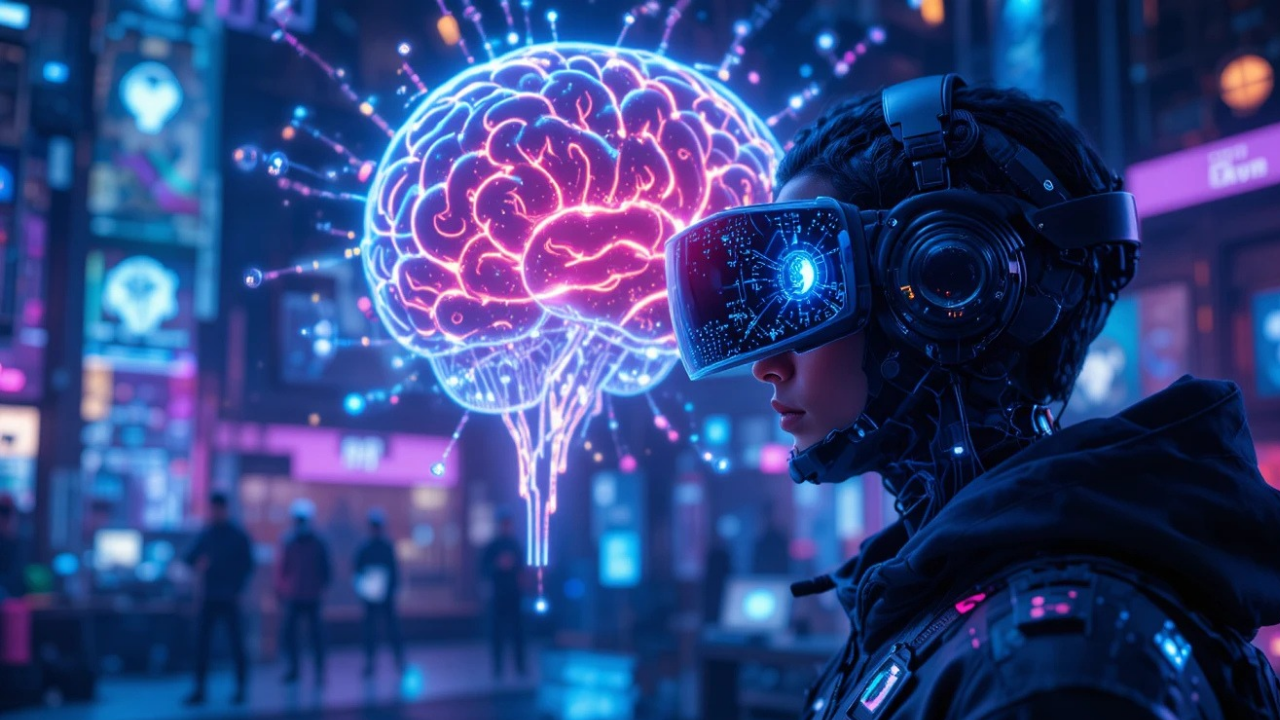
Remember when a video game “boss” was just a bigger sprite that walked back and forth and shot at you on a timer? Those days are fading fast. Walk into any conversation about the gaming industry right now and within a few minutes, someone’s talking about how AI is changing gaming — not as some far-off sci-fi concept, but as something already baked into the games sitting on your hard drive today.
If you’ve played a game recently where an enemy actually flanked you, or a non-playable character remembered something you said an hour ago, you’ve already brushed up against this shift. This isn’t a minor patch note. It’s a fundamental change in how games are built, how they play, and how they’ll feel five years from now.
In this article, we’ll break down exactly what’s happening: how AI game development is reshaping studio workflows, what AI NPCs can actually do now versus what’s still hype, how generative AI in gaming is building entire worlds, and what all of this means for the future of play. Whether you’re a curious gamer, an aspiring developer, or just trying to make sense of the headlines, you’ll walk away with a clear, grounded picture.
Why AI Is Suddenly Everywhere in Gaming
AI isn’t new to gaming — pathfinding algorithms and rule-based enemy behavior have existed since the arcade era. What’s changed is the type of AI now available to developers. The rise of machine learning, large language models, and generative systems has given studios tools that don’t just follow scripts — they generate, adapt, and respond in ways that weren’t computationally realistic a decade ago.
Three forces are driving this shift at the same time:
- Cheaper compute power. Training and running models is no longer reserved for tech giants with server farms.
- Player expectations. Gamers who’ve seen what modern AI chatbots and image tools can do now expect games to feel less scripted and more alive.
- Competitive pressure. Studios are racing to differentiate their titles, and AI-driven features are a clear way to stand out in a crowded market.
Put simply, the technology matured at the exact moment the industry needed something new to offer. That convergence is why this topic has moved from tech blogs to mainstream gaming press so quickly.
AI Game Development: How Studios Are Building Differently
The most immediate impact of AI isn’t even visible to players — it’s happening behind the scenes, inside development pipelines.
Faster Prototyping and Asset Creation
Concept artists now use AI image tools to rapidly generate mood boards and environment concepts before committing to a final art direction. Level designers use AI-assisted tools to quickly block out rough layouts, testing pacing and difficulty before a single polished asset is made. This doesn’t replace the artists and designers — it compresses the time between “idea” and “playable draft,” which used to take weeks.
AI-Assisted Coding and QA
Game code is complex, and bugs are inevitable. Many studios now use AI coding assistants to catch errors, suggest optimizations, and even auto-generate test cases that simulate thousands of player actions to find edge-case bugs humans might miss. This is a quiet but massive shift in AI game development, because it directly affects how stable a game is at launch.
Smaller Teams, Bigger Ambitions
Perhaps the most understated effect: AI tools are lowering the barrier to entry. Independent developers and small studios can now attempt projects — like open-world exploration games or systems with responsive dialogue — that used to require AAA-sized budgets and teams. This is genuinely reshaping who gets to make games, not just how they’re made.
AI NPCs: From Scripted Extras to Believable Characters
This is the area most players notice first, and it’s where the term AI NPCs gets thrown around a lot — sometimes accurately, sometimes as marketing spin.
What AI NPCs Actually Do Today
Traditional NPCs follow decision trees: if the player does X, the NPC does Y. It’s rigid but predictable. Newer smart AI characters in games use large language models and behavior systems to generate dialogue on the fly, react to unscripted player actions, and maintain a form of memory across a play session.
Practical examples already shipping or in testing include:
- Companion characters that comment on your specific playstyle rather than generic barks
- Merchant NPCs that negotiate prices based on simulated relationship or reputation systems
- Enemy squads that adapt tactics mid-fight based on what strategies you’ve already used
Where the Hype Outpaces Reality
It’s worth being honest here: fully autonomous, endlessly conversational NPCs that never break immersion are still more demo reel than shipped product. Latency, cost of running models in real time, and the need for tight narrative control mean most studios are using AI NPCs in hybrid systems — a scripted narrative backbone with AI-generated flourishes layered on top. That’s not a knock on the tech; it’s just where the industry realistically stands in mid-2026.
Why This Matters for Immersion
The appeal isn’t just novelty. Static NPCs are one of the biggest immersion-breakers in games — the moment a character repeats the same line for the fifth time, the illusion cracks. AI-driven characters, even in their current hybrid form, meaningfully extend how long a world feels believable.
Generative AI in Gaming: Building Worlds on the Fly
Beyond characters, generative AI in gaming is changing how the worlds themselves get built — both during development and, increasingly, during actual gameplay.
Procedural Generation Gets Smarter
Procedural generation isn’t new (think No Man’s Sky or Minecraft), but older systems relied on fairly rigid mathematical rules, which could produce repetitive or nonsensical results. Newer generative models can produce AI-generated game worlds with more coherent geography, believable settlement placement, and environmental storytelling that feels intentional rather than random.
Dynamic, Player-Responsive Environments
Some experimental titles are pushing further: worlds that reshape themselves based on player choices, generating new quest lines, terrain features, or even entire regions in response to how someone plays. This is still early-stage for polished, big-budget releases, but it points toward a future where no two playthroughs generate the same map at all.
The Trade-Off: Consistency vs. Novelty
Generative worlds bring a real design challenge — quality control. Handcrafted worlds guarantee a certain level of polish; generated ones risk inconsistency or “AI weirdness” (oddly placed objects, illogical terrain). The best implementations right now use generative AI as a first draft that human designers then refine, rather than a fully automated pipeline.
Machine Learning in Games: The Invisible Layer
Not all AI in gaming is flashy. A huge amount of machine learning in games happens quietly, improving systems players never consciously notice.
- Dynamic difficulty adjustment — Games that subtly tune enemy strength or resource availability based on how a specific player is performing, so both beginners and veterans stay engaged.
- Anti-cheat systems — ML models trained to detect abnormal player behavior patterns far faster than manual review ever could.
- Matchmaking — Multiplayer games use ML to balance lobbies based on skill, latency, and even playstyle compatibility.
- Personalized recommendations — In-game stores and content suggestions increasingly use the same ML techniques that power streaming service recommendations.
These features rarely make headlines, but collectively they shape the day-to-day experience of nearly every major online game.
AI Game Design: Rethinking How Games Are Structured
AI game design goes beyond individual features — it’s changing the philosophy of what a game even is. Designers are beginning to build systems rather than fixed content: rules, character motivations, and world logic that AI can then populate dynamically. This is a shift from “author everything in advance” to “author the possibility space and let systems fill it in.”
This approach carries real design responsibility. A poorly tuned AI system can produce nonsensical quests or characters that behave in immersion-breaking ways. The studios getting this right treat AI as a collaborator with guardrails — not an autopilot.
The Future of AI in Gaming: What to Expect Next
Looking ahead, a few trends seem likely to define the future of AI in gaming over the next several years:
- On-device AI — Running smaller, optimized models locally on consoles and PCs to reduce latency for real-time NPC dialogue, rather than relying on cloud calls.
- Hybrid narrative systems — Writers crafting core story beats while AI handles branching, reactive dialogue within those boundaries.
- Player-generated content at scale — Tools that let players describe a mod, level, or character concept in plain language and have AI help build it.
- More transparent AI use — As player awareness grows, expect more studios to clearly communicate where and how AI is used, partly in response to community debates over labor and authenticity in game development.
The throughline across all of these: AI is moving from a backend efficiency tool toward a front-and-center gameplay feature, but always in partnership with human designers, not as a replacement for them.
Frequently Asked Questions: How AI Is Changing Gaming
Is AI going to replace game developers?
No. AI is automating specific, often repetitive tasks — asset variation, bug detection, dialogue drafting — but creative direction, narrative vision, and quality judgment still require human developers. Most studios describe AI as a productivity tool, not a replacement for their teams.
What are AI NPCs, exactly?
AI NPCs are non-playable characters powered by machine learning or language models that can generate dynamic dialogue, adapt behavior to player actions, and simulate memory or relationships, instead of relying solely on pre-written scripts.
Are AI-generated game worlds actually random, or are they designed?
They’re a mix. Developers set the rules, constraints, and style — AI fills in the specific details within those boundaries. It’s closer to “guided generation” than pure randomness.
Will AI make games cheaper to develop?
It can reduce time spent on certain tasks like prototyping and QA, which may lower some costs. However, player expectations for polish and content volume are also rising alongside the technology, so overall budgets aren’t necessarily shrinking.
How can I try AI-driven games right now?
Several indie titles and tech demos already showcase AI NPC dialogue and generative environments. Searching recent game showcases or platforms like Steam for “AI-powered” or “generative” tags is a good starting point to explore what’s currently available.
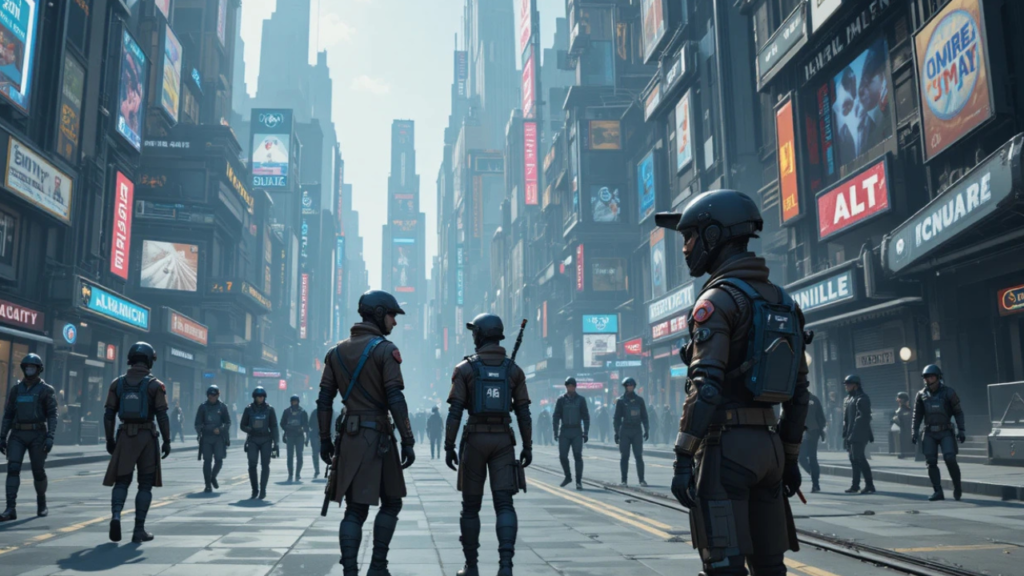
Final Thoughts: A New Era of Play Is Already Here
AI isn’t a future promise in gaming anymore — it’s a current, active force reshaping how games are made and played, from smarter NPCs and generative worlds to invisible systems tuning difficulty behind the scenes. The technology is genuinely powerful, but it’s not magic, and the best results are coming from studios that treat AI as a creative partner rather than a shortcut.
If you’re a gamer, keep an eye on how your favorite studios talk about AI in their next release — it’ll tell you a lot about where the industry is headed. If you’re a developer or studio exploring how to responsibly integrate these tools into your own pipeline, now is the time to start experimenting, testing, and learning what works for your specific project.
Curious how AI could fit into your next game project or studio workflow? Reach out to discuss where these tools genuinely add value — and where a human touch still matters most.
Related Article:
Best games with smart AI characters

Founder of Aivexify
Himanshu Deora is an AI tools researcher and digital publisher who tests AI software, automation tools, and emerging technology trends and AI content creator passionate about sharing helpful guides, AI tools, software tutorials, and the latest digital trends. Through Aivexify, he helps readers discover smart technology, productivity tools, and practical online resources in a simple and easy-to-understand way.