
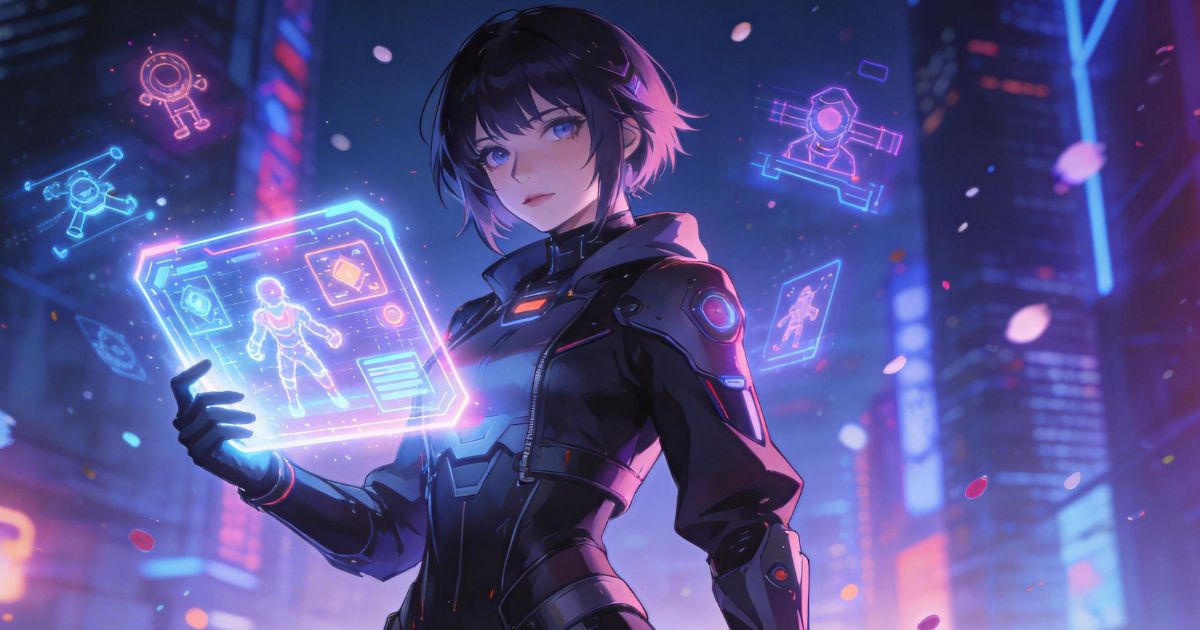
Imagine returning to a bustling city after 40 hours of gameplay, only to discover that an entire NPC kingdom has collapsed not because of a pre-scripted event, but due to a minor decision you made early on that rippled through the world. The blacksmith whose family you saved now leads a resistance, while the lord you slighted has fallen from power. This is the power of AI game storytelling and emergent gameplay.
Games once followed rigid, fixed scripts with predictable NPCs repeating the same lines. In 2026, artificial intelligence creates living, reactive worlds where stories evolve uniquely for every player through dynamic quest generation, adaptive narratives, and intelligent systems. This represents the biggest storytelling revolution since open-world design.

What Is AI Game Storytelling?
AI game storytelling uses artificial intelligence to generate, adapt, and drive narratives in real time. It combines:
- AI-generated dialogue and branching paths
- Procedural and dynamic quest generation
- Adaptive storytelling based on player behavior
- Intelligent NPC systems with persistent memory
The goal is true emergent gameplay, where unexpected player decisions create entirely new narrative outcomes that developers never explicitly scripted.
How AI NPCs Are Becoming More Human
AI NPCs are evolving from scripted puppets into believable characters:
- Memory systems track interactions across dozens of hours.
- Emotional reactions shift based on player tone, actions, and history.
- Dynamic voice and relationships support natural conversations, evolving alliances, rivalries, or romances.
- Unscripted conversations let players negotiate, bluff, or bond freely.
Player feedback has been overwhelmingly positive, with studies showing high enjoyment and sense of meaningful choice in these systems.
How AI Is Transforming Video Game Narratives
Dynamic NPC Conversations
NPCs engage in context-aware, freeform dialogue instead of looping lines.
Personalized Story Paths
Stories adapt to your morality, playstyle, and habits.
Infinite Replayability
Procedural systems generate fresh quests, events, and dialogue trees.
Emotionally Adaptive Narratives
Games heighten tension or offer redemption based on how you play.
Core Technologies Behind AI-Powered Video Game Storytelling
- Generative AI — Real-time dialogue, plots, and descriptions.
- Machine Learning — Behavior prediction and story shaping.
- Procedural Generation — Dynamic worlds and events.
- Natural Language Processing (NLP) — Human-like conversation.
- Large Language Models (LLMs) — Adaptive personalities and long-term memory.
AI Storytelling vs Traditional Game Writing
| Aspect | Traditional Storytelling | AI Storytelling |
| Dialogue | Fixed, pre-written scripts | Dynamic, context-aware, unscripted |
| Quests & Events | Hand-crafted | Personalized + procedurally generated |
| Replayability | Limited by content volume | Near-infinite variations & emergent gameplay |
| NPCs | Scripted behaviors | Adaptive with memory & emotion |
| Development | Highly manual & time-intensive | Faster iteration with human creative control |

How AI Storytelling Changes RPG Games
In AI-powered RPGs like those inspired by Skyrim or Baldur’s Gate, companions remember your betrayals or heroic deeds years later. Factions dynamically shift alliances based on your reputation. AI enables emergent storytelling at scale turning epic campaigns into deeply personal journeys that feel unique to each player.
Can AI Create Infinite Video Game Stories?
Yes, through the combination of generative models, procedural rules, and memory systems. Titles like AI Dungeon and modern platforms demonstrate near-endless coherent narratives. However, the best results come from hybrid systems where AI provides scale and variation while human designers maintain thematic coherence and emotional payoff.
The Hidden Problems With AI Storytelling
Despite the hype, real challenges exist:
- Players exploiting systems — Finding loopholes that break immersion (e.g., repeating phrases to manipulate NPCs).
- Broken narrative coherence — Stories that drift into illogical or repetitive territory.
- Emotional inconsistency — AI struggling with long-term tonal consistency or deep character arcs.
- Memory overload — Too many tracked variables leading to performance issues or diluted focus.
- Computational cost — Running advanced LLMs at scale remains expensive, especially for open worlds.
These issues highlight why balanced human-AI collaboration remains essential.
Real Industry Adoption and Examples
- Nemesis System (Middle-earth: Shadow of Mordor/War): A landmark in emergent storytelling. Orc captains remember defeats, develop grudges, rise in ranks, and create personal rivalries — turning enemies into dynamic narrative drivers.
- Ubisoft Ghostwriter: Assists writers in generating NPC dialogue drafts efficiently.
- NVIDIA ACE: Powers lifelike, conversational NPCs with memory and autonomy (seen in prototypes like Covert Protocol and integrations in PUBG, inZOI, etc.).
- Inworld AI: Enables emotionally aware NPCs with persistent memory; used in partnerships with major studios.
- Other standouts: RimWorld (AI storytellers driving drama), No Man’s Sky (procedural universes), and emerging AI-native experiences like Jenova.ai titles with persistent memory and adaptive arcs.
Market Stats: The AI in gaming market is projected to grow rapidly, with estimates showing strong double-digit CAGRs and potential reaching tens of billions by 2030–2035, driven by NPC tech and procedural content.
Why AI Storytelling Creates More Immersive Video Games
- Deeper emotional investment through living worlds
- Truly unique emergent gameplay experiences
- Smarter, believable NPCs
- Faster content creation and iteration
- Endless possibilities for both single-player and live games
The Future of AI-Generated Video Game Narratives
We’re heading toward fully adaptive RPGs, persistent memory across sessions, voice AI companions, emotional storytelling engines, multiplayer AI narratives, and AI dungeon masters. Games may truly never tell the same story twice.
Will AI Replace Human Game Writers?
AI excels at variation and scale but lacks deep emotional insight and thematic mastery. The future is powerful collaboration: humans provide soul, vision, and curation; AI handles iteration and personalization.
Best AI Tools for Game Storytelling
- Inworld AI — Memory-rich, personality-driven NPCs
- NVIDIA ACE — Lifelike animation, speech, and autonomy
- Replica Studios, Convai, Charisma AI — Voice and dialogue systems
- OpenAI APIs + others — Prototyping and generation
FAQs
What is AI game storytelling? AI game storytelling uses artificial intelligence to create dynamic, responsive, and personalized narratives. Instead of fixed scripts, stories adapt in real time to player choices, generating emergent gameplay and unique experiences for each player.
Can AI create infinite video game stories? Yes — generative AI combined with procedural systems can produce near-endless variations. However, maintaining coherence, emotional depth, and quality usually requires strong human oversight and design frameworks.
Which games best demonstrate AI storytelling? Standouts include AI Dungeon, RimWorld, No Man’s Sky, the Nemesis System in Shadow of Mordor/War, and modern prototypes using NVIDIA ACE and Inworld AI for conversational NPCs.
How do AI NPCs work? They combine LLMs for dialogue, memory databases for persistence, NLP for natural conversation, and behavioral AI for emotional and contextual responses, enabling unscripted interactions.
Is AI replacing game writers? No. AI augments writers by handling repetitive tasks and generating variations, allowing humans to focus on high-level creativity, themes, and emotional resonance.
What is emergent gameplay in AI storytelling? It occurs when simple rules and player actions create complex, unexpected narrative outcomes that weren’t directly scripted, leading to highly personal and replayable stories.
Conclusion
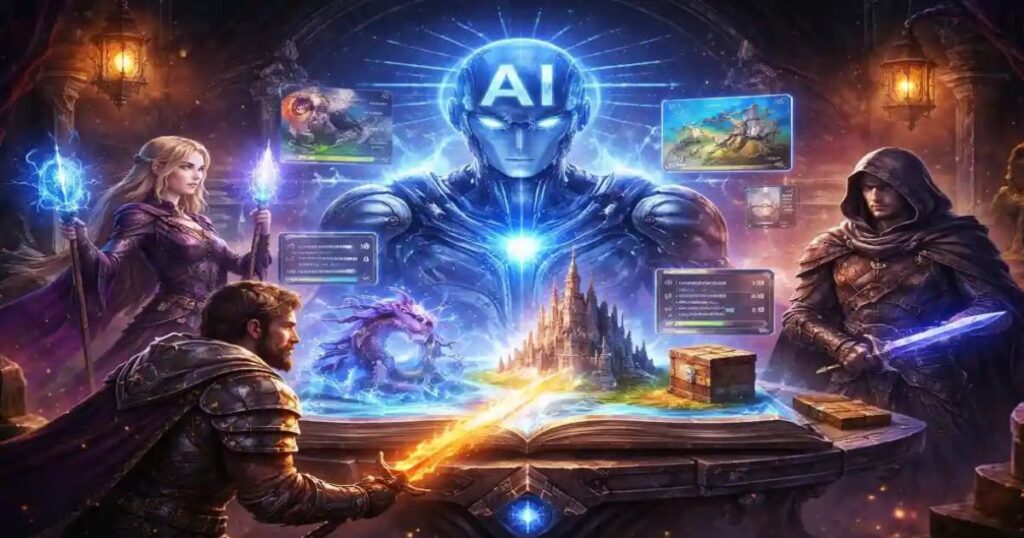
In the future, games may never tell the same story twice. Every player could step into a world uniquely shaped by their choices, emotions, relationships, and imagination. AI game storytelling isn’t just improving narratives it’s redefining interactive entertainment itself.
By blending human creativity with artificial intelligence, we stand at the dawn of truly living games. The era of deeply personal, emergent, and unforgettable adventures is just beginning.
Top Ai Games Trends in 2026

Founder of Aivexify
Himanshu Deora is an AI tools researcher and digital publisher who tests AI software, automation tools, and emerging technology trends and AI content creator passionate about sharing helpful guides, AI tools, software tutorials, and the latest digital trends. Through Aivexify, he helps readers discover smart technology, productivity tools, and practical online resources in a simple and easy-to-understand way.