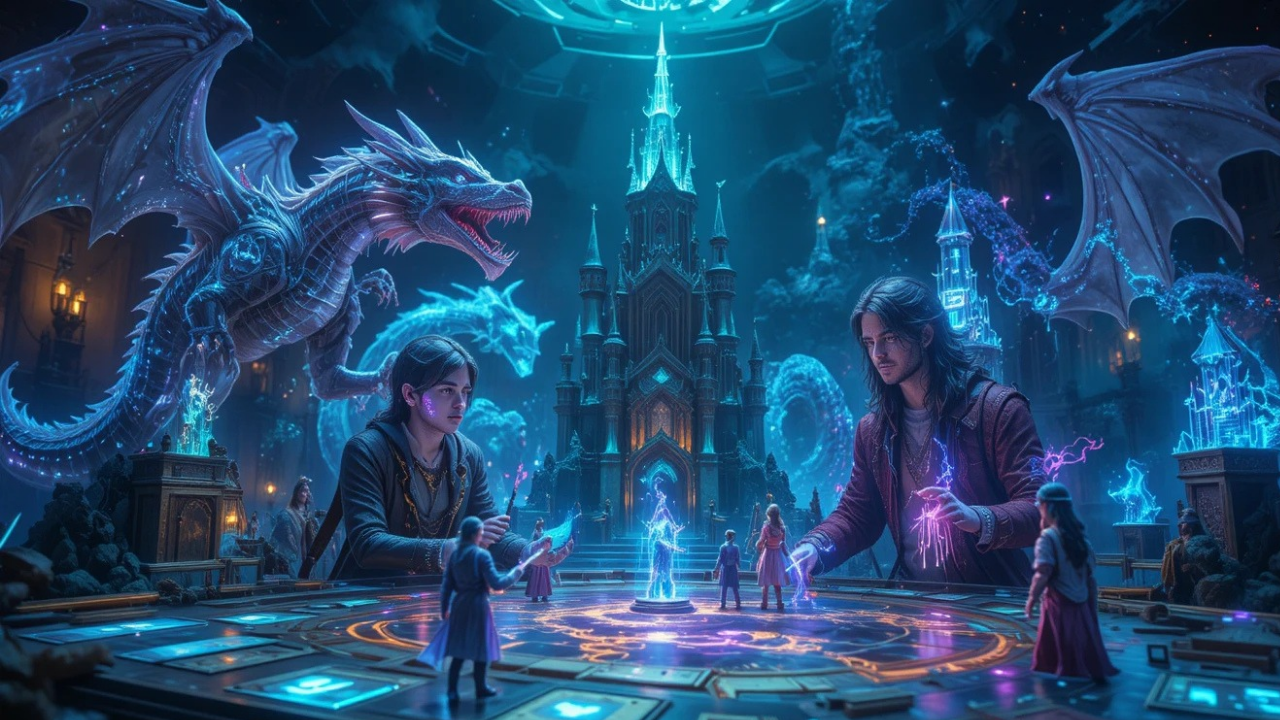
Friday night. Your players arrive in 20 minutes. You still haven’t finished:
- the tavern NPCs
- the villain monologue
- the backup encounter
- the side quests
- the city descriptions
- or the emergency content you’ll inevitably need after your players derail the campaign within the first hour.
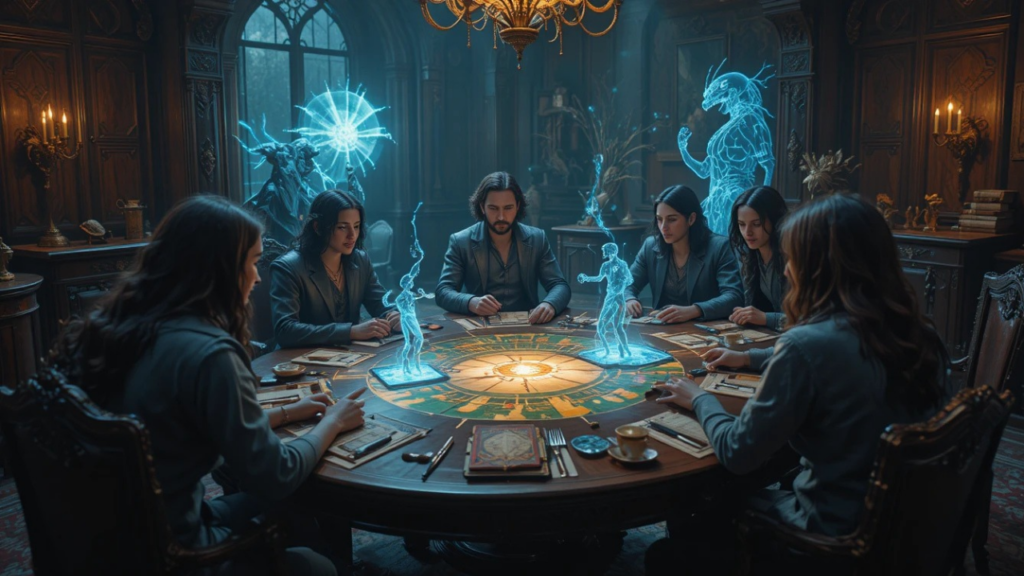
Again.
For years, being a Dungeon Master meant accepting a brutal tradeoff: one hour of gameplay often required several hours of invisible prep.
That’s exactly why AI Dungeon Master tools exploded in popularity over the last few years.
In 2026, modern AI RPG assistants can:
- generate NPC dialogue instantly
- build dynamic side quests
- organize campaign lore
- improvise worldbuilding
- summarize sessions
- create maps and portraits
- and even simulate characters during live gameplay
But there’s a problem most articles conveniently avoid talking about: A lot of AI DM tools still feel terrible in actual play. Some generate generic fantasy sludge. Others lose continuity halfway through a campaign. Some are useful for prep but collapse during improvisation. And a few automate so much that they drain the human creativity that makes tabletop RPGs special in the first place.
After testing the biggest AI Dungeon Master tools available in 2026, here’s what actually works — and what still feels gimmicky.
What Are AI Dungeon Master Tools?
AI Dungeon Master tools are AI-powered assistants designed to help tabletop RPG players and Dungeon Masters with campaign preparation, storytelling, organization, and improvisation.
They generally fall into six categories:
1. Campaign Management Tools These focus on:
- lore organization
- continuity tracking
- NPC databases
- session memory
- worldbuilding archives
Examples: LoreKeeper, Obsidian integrations, campaign memory systems.
2. Narrative AI & Story Generators These generate:
- quests
- lore
- dialogue
- character backstories
- worldbuilding details
Examples: ChatGPT, Claude, Gemini, NovelAI.
3. Live Improvisation Assistants These help DMs react during gameplay by generating:
- NPC dialogue
- random encounters
- tavern rumors
- side quests
- environmental descriptions
This is where general-purpose AI models dominate.
4. NPC & Character Generators Focused specifically on:
- personalities
- portraits
- stat blocks
- motivations
- speech styles
Examples: CharGen, AI portrait tools, specialized NPC generators.
5. Visual AI Tools These create:
- maps
- battle arenas
- tokens
- environmental layouts
Examples: Dungeon Alchemist, Midjourney workflows, VTT integrations.
6. Voice & Gameplay Hybrid Systems Emerging tools now combine:
- AI voices
- memory systems
- gameplay automation
- Discord integration
- persistent characters
This category is still evolving rapidly in 2026.
Why So Many AI Dungeon Master Tools Still Feel Disappointing
This is the part most AI articles skip because it ruins the hype narrative.
AI is incredible at speed. It is not automatically incredible at storytelling.
After extended testing, the biggest weaknesses become obvious fast.
Generic Fantasy Syndrome Many AI tools recycle the same fantasy tropes:
- mysterious hooded stranger
- morally gray mercenary
- ancient forgotten evil
- sarcastic tavern keeper
- cursed artifact hidden beneath ruins
At first it feels impressive. Then you notice every kingdom starts sounding vaguely identical. The danger isn’t just bad writing. It’s homogenized creativity. If every DM uses the same AI patterns, campaigns slowly start feeling algorithmically similar.
Long Campaign Memory Problems AI tools still struggle with:
- continuity
- world-state tracking
- long-term consequences
- remembering subtle player decisions
Even advanced models occasionally:
- contradict lore
- forget character relationships
- invent false details
- rewrite established facts
That becomes dangerous in serious campaigns where immersion matters.
Live Session Reliability Issues Some tools perform well during preparation but fall apart in real-time sessions. Problems include:
- lag
- context loss
- hallucinated rules
- repetitive dialogue
- slow response times during combat-heavy moments
Nothing kills immersion faster than: “Wait… didn’t this NPC die three sessions ago?”
Over-Automation Can Hurt Creativity Ironically, AI can sometimes make Dungeon Masters worse. When every quest hook, city, monster, rumor, tavern, puzzle, and NPC is generated instantly, the campaign can lose the weird personal creativity that makes tabletop RPGs memorable.
The healthiest approach is treating AI as a co-DM rather than a replacement. Use it for speed, brainstorming, organization, filler generation, and prep reduction. But keep dramatic pacing, emotional storytelling, humor, improvisation, and player reading human. That’s still the magic.
Best AI Dungeon Master Tools Compared (2026)
1. ChatGPT / Claude / Gemini — Best Overall AI DM Assistants Best For: Flexible prep, improvisation, and general-purpose campaign support.
General AI models remain the strongest overall option because they can adapt to almost anything: dialogue, quests, lore, encounters, worldbuilding, summaries, rules explanations.
During testing, ChatGPT handled live tavern roleplay surprisingly well, especially when given clear NPC personalities and campaign context. Claude performed better for nuanced writing, emotional scenes, and long-form storytelling. Gemini’s massive context windows helped more with continuity-heavy campaigns.
What Works Well:
- instant NPC dialogue
- side quest generation
- emergency improvisation
- campaign summaries
- faction lore
- city descriptions
- player recap generation
Biggest Weaknesses:
- hallucinated rules
- continuity drift
- repetitive fantasy phrasing
- requires strong prompting
The quality gap between a skilled prompter and a casual user is massive.
Verdict: Still the best overall balance between flexibility, creativity, and utility. For most DMs in 2026, a good general AI model replaces several smaller niche tools.
2. LoreKeeper — Best for Campaign Organization Best For: Long-running campaigns with heavy lore.
LoreKeeper shines when campaigns become too complicated for normal notes. Its strongest feature is grounded campaign memory: NPC tracking, world lore, location continuity, relationship mapping, searchable archives.
Instead of relying entirely on AI memory, LoreKeeper anchors responses to uploaded campaign information. That dramatically reduces continuity errors.
What Works Well: lore consistency, session tracking, campaign databases, searchable worldbuilding.
Biggest Weaknesses: Less effective for rapid live improvisation compared to ChatGPT-style tools.
Verdict: Excellent for DMs running serious long-term worlds where continuity matters.
3. CharGen — Best All-in-One Prep Tool Best For: Fast weekly session preparation.
CharGen focuses heavily on practical DM workflows: NPC generation, portraits, stat blocks, monsters, tokens, visual assets. It’s one of the most useful “time-saving” tools currently available.
The danger is becoming overly dependent on generated content instead of adding your own personality.
Verdict: One of the strongest productivity-focused AI DM tools available right now.
4. NovelAI & KoboldAI — Best for Narrative and Privacy Best For: Storytelling-focused DMs and privacy-conscious users.
NovelAI excels at atmospheric prose and darker narrative styles. KoboldAI appeals more to technical users who want local AI hosting, model customization, full control, and privacy.
This setup is powerful but absolutely not beginner-friendly.
Biggest Weaknesses: steeper learning curve, tuning complexity, occasional verbosity.
Verdict: Best suited for DMs who care deeply about writing quality and customization.
5. AI Dungeon — Best for Solo Adventures Best For: Solo campaigns and experimental storytelling.
AI Dungeon remains one of the most entertaining sandbox-style RPG experiences available. Its greatest strength is unpredictability. Its greatest weakness is also unpredictability.
Without careful steering, stories can become chaotic fast.
Verdict: Fantastic for experimentation and solo roleplay. Less reliable for structured tabletop campaigns.
6. Dungeon Alchemist — Best AI Map Generator Best For: Battle maps and virtual tabletops.
Dungeon Alchemist dramatically speeds up visual preparation. Generating believable fantasy interiors manually used to take hours. Now it takes minutes. The procedural room population system is especially useful for taverns, dungeons, castles, encounters, villages.
Biggest Weaknesses: It improves visuals more than storytelling.
Verdict: One of the most practical visual tools for modern DMs.
Best AI Tool for NPC Creation
If your biggest pain point is creating memorable characters quickly: Best Choices
- CharGen → portraits + personalities
- ChatGPT → live dialogue
- NovelAI → atmospheric writing
The strongest workflow is combining them. Example: Generate portrait in CharGen → Build personality in ChatGPT → Expand dialogue style with NovelAI. That creates far richer NPCs than relying on a single tool alone.
Best AI Tool for Live Session Improvisation
This is where many AI tools fail. The best live-session assistants in 2026 are:
- ChatGPT
- Claude
- Gemini
Why? Because speed and flexibility matter more than perfect lore systems during live gameplay. Good improvisation AI should handle random player chaos, unexpected decisions, emergency side quests, dialogue pivots, environmental reactions. Fast response time matters more than beautiful prose when players are staring at you waiting for an answer.
Example AI Dungeon Master Workflow (2026)
The most effective DMs rarely use a single AI tool. Instead, they combine specialized systems.
Before the Session
- LoreKeeper → campaign continuity
- ChatGPT → encounters & quests
- Dungeon Alchemist → battle maps
- CharGen → NPC portraits
Prep time can drop from 6 hours to 2.
During the Session
- ChatGPT or Claude → emergency improvisation
- AI recap tools → automatic note capture
- NPC generators → quick side characters
After the Session
- AI-generated recaps
- lore updates
- relationship tracking
- future quest suggestions
This is where AI genuinely becomes useful rather than gimmicky.
Best AI Prompts for Dungeon Masters
NPC Prompt “Create a paranoid black-market alchemist operating beneath a wealthy coastal city. Give them hidden motives, speaking quirks, and one secret tied to the campaign villain.”
Tavern Rumor Prompt “Generate five believable tavern rumors in a declining mining town. Two should be false, one exaggerated, and one secretly connected to the main quest.”
Side Quest Prompt “Create a morally gray side quest involving a missing caravan, local corruption, and a difficult ethical choice.”
Villain Prompt “Write a villain monologue from a ruler who genuinely believes authoritarian control is necessary to prevent another civil war.”
These prompts work better when grounded in specific locations, emotional stakes, campaign themes, and character motivations. Generic prompts produce generic fantasy.
The Hidden Cost of AI-Assisted DMing
This is another issue most people underestimate. A modern AI-assisted DM setup might include:
- ChatGPT subscription
- lore software
- map generators
- VTT subscriptions
- art tools
- voice tools
Suddenly the “cheap hobby” becomes $60–150 per month. That’s before buying sourcebooks, minis, assets, campaigns.
AI absolutely reduces prep time. But it can also create tool fatigue fast.
Will AI Replace Human Dungeon Masters?
No.
AI can automate prep, filler generation, organization, brainstorming, summaries. It cannot replace group chemistry, comedic timing, emotional intelligence, reading the table, dramatic pacing, spontaneous creativity.
A great Dungeon Master adapts emotionally to players in ways AI still fundamentally cannot. The best campaigns feel personal because they are personal. That remains human.
The Future of AI Tabletop RPGs
The next few years will likely bring:
- persistent campaign memory
- AI voice NPCs
- adaptive procedural storytelling
- multimodal worldbuilding
- smarter rules systems
- AI-powered virtual tabletops
But there’s also a growing risk: As more DMs rely on the same AI systems, campaigns may become increasingly standardized. The future challenge isn’t just making AI more powerful. It’s keeping tabletop storytelling weird, personal, and unpredictable.
Final Verdict
The best AI Dungeon Master tool depends entirely on your priorities.
- Best Overall: ChatGPT / Claude
- Best Campaign Memory: LoreKeeper
- Best All-In-One Prep: CharGen
- Best Storytelling: NovelAI
- Best Privacy & Customization: KoboldAI
- Best Visual Tool: Dungeon Alchemist
- Best Solo Experience: AI Dungeon
The smartest Dungeon Masters in 2026 aren’t replacing themselves with AI. They’re using AI to eliminate repetitive prep work so they can spend more time creating unforgettable moments for their players.
Ai Programing Assistants in 2026

Founder of Aivexify
Himanshu Deora is an AI tools researcher and digital publisher who tests AI software, automation tools, and emerging technology trends and AI content creator passionate about sharing helpful guides, AI tools, software tutorials, and the latest digital trends. Through Aivexify, he helps readers discover smart technology, productivity tools, and practical online resources in a simple and easy-to-understand way.