

Building a game world used to mean months of painstaking manual work — sketching layouts, testing level flow, iterating endlessly until everything clicked. Today, AI generated game maps are changing that equation entirely, putting professional-grade level design tools in the hands of indie developers, solo creators, and AAA studios alike.
Whether you’re a seasoned game developer looking to accelerate your pipeline or a hobbyist building your first dungeon crawler, AI level design tools can help you generate rich, playable environments in a fraction of the time. In this guide, we’ll break down how AI game level generators work, which tools are leading the pack in 2026, and how to actually use them effectively in your workflow.
What Are AI Generated Game Maps?
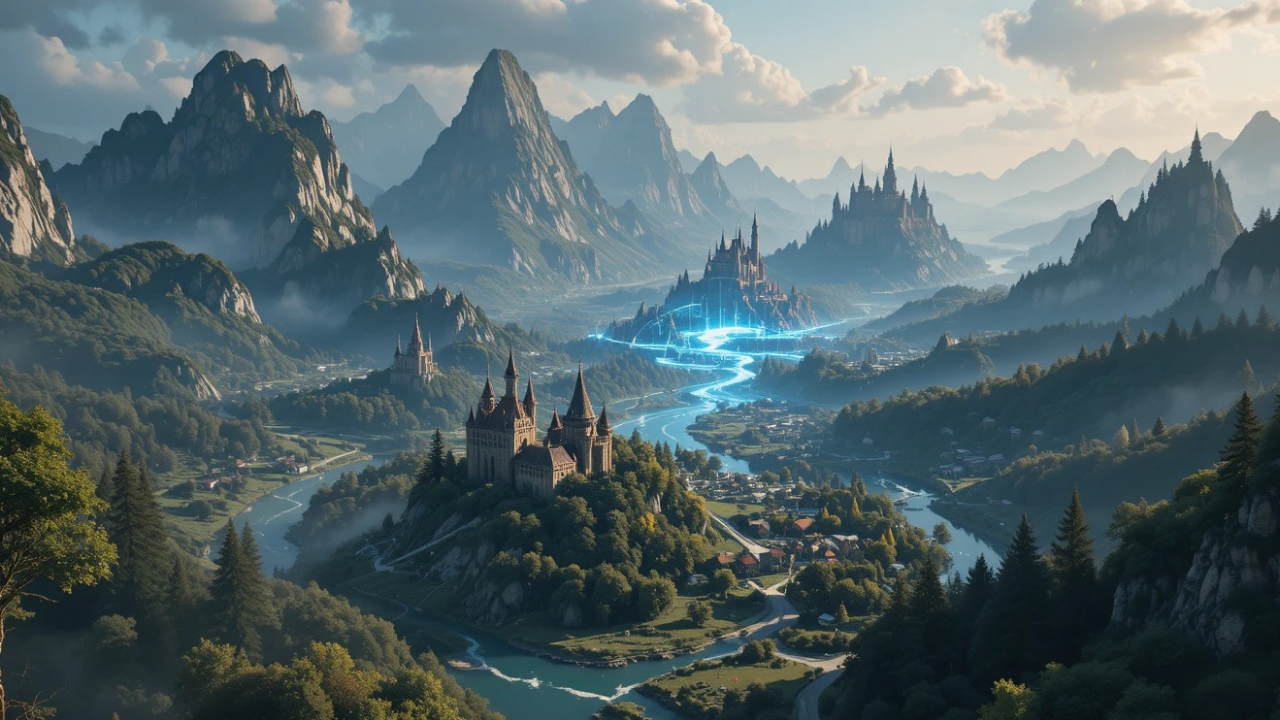
AI generated game maps are game environments — levels, worlds, dungeons, terrain, and layouts — created either fully or partially by artificial intelligence rather than designed by hand, tile by tile.
At their core, these tools use a combination of techniques:
- Procedural Content Generation (PCG): Algorithmic systems that create content based on rules, seeds, and randomness. Think Minecraft’s terrain or Spelunky’s dungeon levels.
- Machine Learning Models: Trained on thousands of existing game levels, these models learn what makes a map “feel” good — balanced enemy placement, navigable corridors, satisfying reward loops — and replicate those patterns intelligently.
- Generative AI (LLMs and Diffusion Models): Newer tools use large language models and image diffusion to generate map layouts from text prompts or reference images, making the process far more intuitive.
The result is a system where you describe what you want — “a dark fantasy dungeon with three locked doors, hidden treasure, and escalating enemy density” — and the AI builds it.
Why AI Level Design Is Taking Over in 2026
The game development industry has been moving toward AI-assisted workflows for years, but 2026 marks a genuine inflection point. Here’s why developers are making the switch:
Speed and Scale
A human level designer might take days to craft a single, polished map. An AI game level generator can produce dozens of viable layouts in minutes. For games that need procedurally generated content at scale — roguelikes, open-world RPGs, survival games — this is transformational.
Accessibility for Solo Developers
Indie game development has exploded, but most solo creators lack the design expertise or time to build complex level architectures. AI level generation democratizes that capability, letting a one-person team punch well above their weight.
Better Player Retention
Procedurally generated content powered by AI keeps games fresh. When no two playthroughs are identical, players stay engaged longer. AI-driven generation can also adapt difficulty and layout based on player behavior — a level of personalization that was simply impossible before.
Reduced Development Costs
For studios working under budget constraints, AI game development tools reduce the human hours required for content creation. Teams can focus skilled designers on high-priority hero content while AI handles the volume work.
Best AI Game Level Generator Tools in 2026
Here’s a breakdown of the most capable AI map generators for game developers right now.
1. Ludus AI
Ludus AI is arguably the most complete AI level design platform available today. It lets developers describe a level in natural language and receive a fully structured map — complete with collision data, enemy spawn points, and loot placement — in seconds. It supports export to Unity, Unreal Engine, and Godot, making it genuinely engine-agnostic.
Best for: RPG and action-adventure level design
Standout feature: Contextual coherence — levels feel intentional, not random
2. Scenario.gg
Originally known for AI asset generation, Scenario.gg has expanded into game environment generation AI. It’s particularly strong for visual asset creation tied to map layouts, making it a good fit for 2D platformers and top-down games where visual style and level structure need to align.
Best for: 2D game developers needing art-consistent maps
Standout feature: Style-locked generation — keeps all map assets visually coherent
3. Promethean AI
Promethean AI focuses on 3D world building and is popular with Unreal Engine users. It uses machine learning to understand spatial relationships and design intent, then populates environments accordingly. Think of it as a smart asset placement system that understands context.
Best for: 3D open-world environments and large-scale level dressing
Standout feature: AI-driven asset population that understands design intent
4. Wave Function Collapse (WFC) Implementations
WFC isn’t a single tool but an algorithm that has spawned dozens of game-specific implementations. It works by analyzing sample tile sets and generating new maps that follow the same structural rules. Many developers use WFC-based tools as the backbone of their procedural map generation pipeline.
Best for: Tile-based 2D games and constrained map generation
Standout feature: Extreme controllability — outputs always follow your defined rules
5. ChatGPT / Claude with Custom Prompts
This might surprise you, but large language models are increasingly useful as AI tools for game developers. With the right system prompts, they can generate JSON-formatted level data, write procedural generation scripts, design enemy placement logic, and even describe map layouts in enough detail to guide art teams or feed into other tools.
Best for: Developers comfortable with scripting who want flexible, text-driven generation
Standout feature: Infinite flexibility — generate anything you can describe
How to Use AI Game Development Tools Effectively
Knowing which tool to use is only half the battle. Here’s how to get the most out of AI level generation in practice.
Start with Constraints, Not Open-Endedness
The biggest mistake developers make with AI map generators is being too vague. “Generate a dungeon” produces mediocre results. “Generate a 20×20 dungeon with exactly one entrance, three branching paths, a boss room, and two dead ends containing loot” produces something you can actually use.
The more constraints you define, the more coherent the output.
Treat AI Output as a Starting Point
AI generated game maps are rarely perfect on first output. Think of them as high-quality drafts. Your job is to iterate — tweak layouts, adjust enemy density, add narrative beats. AI handles the heavy lifting of generation; human designers handle the craft and storytelling.
Blend Procedural and Hand-Crafted Content
The best games in 2026 aren’t using pure AI generation. They’re using a hybrid approach: hand-crafted key moments (boss arenas, story beats, tutorial sections) combined with AI generated content for everything else. This gives players both surprise and intentionality.
Validate with Playtesting Early
Procedural content can look great on paper and play terribly. Build playtesting into your loop early when using AI level generation tools. Catch navigation dead-ends, difficulty spikes, and pacing issues before they compound.
AI Generated Game Maps vs. Traditional Level Design: Key Differences
| Factor | Traditional Design | AI Level Generation |
| Time per map | Hours to days | Seconds to minutes |
| Scalability | Limited by team size | Near-infinite output |
| Consistency | High (human-controlled) | Variable (seed-dependent) |
| Creative ceiling | Very high | Improving rapidly |
| Cost | High (designer hours) | Low (compute cost) |
| Uniqueness | One-off | Reproducible via seed |
Traditional level design still wins when intentional storytelling, precise player guidance, or unique set pieces are the priority. AI generation wins when volume, variety, and speed matter most.
Frequently Asked Questions
What is an AI game level generator?
An AI game level generator is a software tool that uses artificial intelligence — including machine learning models, generative AI, and procedural algorithms — to automatically create game levels, maps, and environments. These tools can generate playable layouts, place enemies and items, and produce terrain features based on developer-defined parameters or natural language descriptions.
Can AI generated game maps be used in commercial games?
Yes. Many commercial games already use procedural content generation AI as part of their level design pipeline. The key consideration is reviewing the terms of service for whichever tool you use, as some AI generation platforms have licensing requirements for commercial use. Generally speaking, output generated by tools you control (like custom WFC implementations or proprietary models) has no licensing restrictions.
How does procedural game map generation differ from AI level design?
Procedural game map generation refers to algorithmic systems that create content based on rules and randomness — like random seed-based dungeon generators. AI level design goes further by using machine learning or generative AI to produce content that feels intentional and design-aware, not just randomly arranged. Modern AI level generation tools often combine both approaches.
Do I need coding skills to use AI level generators?
It depends on the tool. Platforms like Scenario.gg and Ludus AI are designed to be accessible without coding knowledge, relying on visual interfaces and natural language prompts. More flexible tools, like custom WFC implementations or LLM-based generation pipelines, do require some scripting ability. Most tools sit somewhere in between, with low-code options available.
Will AI replace human level designers?
Not in the foreseeable future. AI level generation excels at volume, variation, and speed — but it lacks the intentional narrative craft, player psychology insight, and creative vision that experienced human designers bring. The most effective studios in 2026 are using AI to amplify their designers, not replace them. Think of it as giving a skilled designer a power tool rather than replacing the designer.
Conclusion: The Future of Game World Generation AI
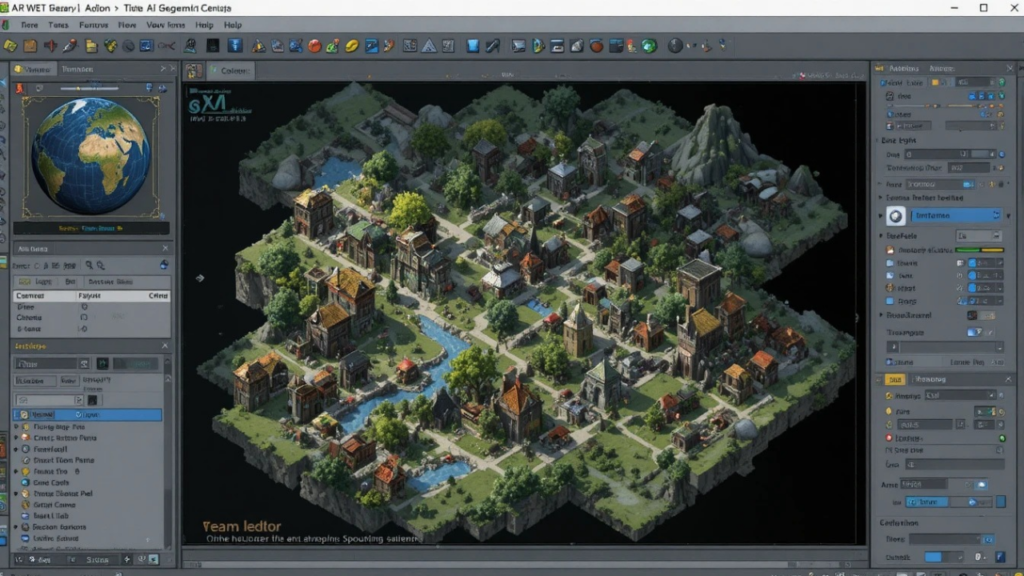
AI generated game maps have moved from experimental novelty to genuine industry tool in a remarkably short time. Whether you’re generating infinite dungeons for a roguelike, populating an open world, or just trying to prototype faster, AI game development tools are now capable enough to be a real competitive advantage.
The developers winning in 2026 aren’t choosing between human creativity and AI efficiency — they’re combining both. Start with constraints, iterate on AI output, preserve human craft for key moments, and use the time you save to build better games.
If you’re ready to explore AI level generation for your own project, start with a free trial of one of the tools listed above. Even a few hours of experimentation will show you what’s possible — and what’s now within reach for developers of any skill level or budget.
Ai Esports Training in 2026

Founder of Aivexify
Himanshu Deora is an AI tools researcher and digital publisher who tests AI software, automation tools, and emerging technology trends and AI content creator passionate about sharing helpful guides, AI tools, software tutorials, and the latest digital trends. Through Aivexify, he helps readers discover smart technology, productivity tools, and practical online resources in a simple and easy-to-understand way.