
Every breathtaking video game environment, immersive virtual reality experience, cinematic animation, and detailed engineering model begins with something fundamental: Automated 3D Mesh Optimization Using AI Technology.
A mesh is the geometric structure that defines the shape of digital objects. It is made of thousands or sometimes millions of polygons carefully connected to create complex forms. These meshes allow designers to build realistic characters, architectural models, industrial prototypes, and entire digital worlds.
However, creating high-quality meshes presents a constant challenge.

Designers want models that look incredibly detailed and realistic. At the same time, these models must remain lightweight enough to render efficiently on computers, mobile devices, and gaming consoles.
If a 3D mesh contains too many polygons, it becomes heavy, slow to render, and difficult to process. If it contains too few polygons, visual quality suffers.
For decades, artists and engineers manually optimized their meshes to achieve this balance a tedious and time-consuming process requiring advanced technical skills.
Today, a powerful new solution is transforming this workflow.
The rise of automated 3d mesh optimization using ai technology is revolutionizing how digital assets are created, refined, and deployed. Artificial intelligence can now analyze complex 3D models, automatically reduce unnecessary geometry, preserve visual quality, and dramatically accelerate production pipelines.
This technology is not just improving efficiency. It is reshaping the entire landscape of 3D design, game development, architecture, product engineering, and digital content creation.
In this article, we will explore how automated 3d mesh optimization using ai technology works, why it matters, and how it is redefining the future of digital design.
Understanding 3D Mesh Optimization
Before exploring artificial intelligence, it is important to understand what mesh optimization means.
A 3D mesh consists of geometric elements including:
- vertices
- edges
- faces
- polygons
These components form the digital surface of a 3D object. High-resolution models often contain extremely dense meshes with millions of polygons. While this level of detail is beneficial for realism, it also introduces several challenges:
- slower rendering performance
- increased memory usage
- longer loading times
- reduced real-time performance
Mesh optimization is the process of simplifying a model while preserving its visual appearance and structural integrity. Traditionally, designers performed these tasks manually using professional 3D software. However, manual optimization can be extremely time-consuming, especially for large projects.
This is why automated 3d mesh optimization using ai technology is becoming an essential solution across industries.
The Evolution of Mesh Optimization Techniques
Early mesh optimization methods relied on mathematical algorithms designed to reduce polygon counts while maintaining surface accuracy.
These methods included:
- edge collapse algorithms
- vertex clustering
- quadric error metrics
While these techniques improved performance, they often required careful manual adjustment to avoid damaging the visual quality of the model. Artificial intelligence introduces a completely different approach.
Rather than relying solely on fixed rules, AI systems can analyze patterns within large datasets of 3D models. These systems learn how to simplify geometry intelligently while preserving important details.
As a result, automated 3d mesh optimization using ai technology can achieve results that previously required hours of manual refinement.
How AI Powers Automated Mesh Optimization
Artificial intelligence brings powerful analytical capabilities to 3D modeling workflows. AI models are trained on vast collections of 3D data to understand how geometry behaves and which elements are visually important.
When applied to a mesh, AI can perform several tasks automatically:
Geometry Analysis
AI algorithms analyze the structure of the mesh to determine which areas require high detail and which areas can be simplified.
Intelligent Polygon Reduction
The system reduces polygon density in less noticeable areas while maintaining key visual features.
Surface Preservation
AI ensures that the optimized mesh maintains smooth surfaces and natural shapes.
Topology Improvement
In some cases, AI can even rebuild the mesh topology to produce cleaner and more efficient geometry.
Through these capabilities, automated 3d mesh optimization using ai technology significantly improves production efficiency without sacrificing visual quality.
Benefits of Automated 3D Mesh Optimization Using AI Technology
1. Faster Production Workflows
One of the most significant advantages of automated 3d mesh optimization using ai technology is speed. What once required hours of manual editing can now be completed in minutes. Designers can quickly optimize models for different platforms, allowing faster iteration during development.
This acceleration enables studios and engineering teams to focus on creativity rather than repetitive technical adjustments.
2. Improved Rendering Performance
Optimized meshes render faster because they contain fewer unnecessary polygons.
This is especially important for applications such as:
- real-time gaming
- virtual reality
- augmented reality
- mobile applications
By reducing computational load, automated 3d mesh optimization using ai technology ensures smoother performance across devices.
3. Reduced File Sizes
Large 3D models can consume significant storage space. AI-driven optimization reduces mesh complexity while maintaining quality, resulting in smaller file sizes. Smaller assets are easier to store, share, and load across digital platforms.
4. Consistent Quality
Human optimization can vary depending on the designer’s experience and workflow.
AI introduces consistency by applying learned optimization strategies across large datasets.
This consistency improves the reliability of 3D pipelines.
5. Scalability for Large Projects
Large projects such as open-world video games or architectural simulations may include thousands of assets. Manual optimization for every object becomes impractical.
With automated 3d mesh optimization using ai technology, entire libraries of models can be optimized automatically.
Industries Benefiting from AI Mesh Optimization
Video Game Development
Modern games require massive environments filled with characters, props, vehicles, and landscapes. Optimized meshes are essential for maintaining real-time performance. Game engines such as Unity and Unreal Engine benefit significantly from optimized assets.
Film and Animation
Film studios produce extremely detailed models for cinematic visuals. AI-powered optimization helps create lighter versions of these models for animation workflows and rendering pipelines. Studios using tools like Blender or Autodesk Maya can streamline production with automated optimization.
Architecture and Engineering
Architectural visualization often involves highly detailed building models. AI optimization allows designers to maintain realism while improving interactive performance.
Virtual and Augmented Reality
VR and AR applications require extremely efficient models to maintain smooth frame rates. AI optimization ensures that immersive environments remain visually rich without overwhelming hardware limitations.
The Role of Machine Learning in Geometry Processing
Machine learning algorithms play a crucial role in modern geometry processing.
These algorithms analyze large datasets of 3D shapes and learn patterns related to surface curvature, structural importance, and visual perception.
This training allows AI systems to determine:
- which vertices can be removed
- which edges should remain
- how to maintain smooth surfaces
As these systems improve, automated 3d mesh optimization using ai technology continues to become more accurate and efficient.
Challenges and Limitations of AI Mesh Optimization
Despite its advantages, AI optimization is not without challenges.
Training Data Requirements
AI models require large datasets of high-quality meshes for training.
Computational Costs
Training deep learning models for geometry processing can require powerful hardware.
Artistic Control
Designers may still need manual adjustments to maintain specific artistic intentions.
For this reason, AI should be viewed as a collaborative tool rather than a replacement for human creativity.
Ethical and Responsible AI in 3D Design
As AI becomes more integrated into digital production pipelines, responsible usage is important.
Design teams should ensure:
- transparency in automated processes
- protection of proprietary 3D assets
- ethical data usage
Maintaining responsible standards ensures that automated 3d mesh optimization using ai technology benefits both creators and organizations.
The Future of AI-Driven 3D Modeling
The future of 3D design is closely connected to artificial intelligence.
Emerging technologies may enable:
- fully automated asset generation
- AI-assisted animation systems
- real-time geometry optimization during rendering
- adaptive meshes that change based on performance needs
As these technologies evolve, automated 3d mesh optimization using ai technology will likely become a standard component of digital content creation pipelines.
How Designers Can Start Using AI Optimization
Professionals interested in adopting AI-driven optimization should begin with the following steps:
Learn AI-Enhanced Tools
Modern 3D software increasingly integrates AI features.
Experiment With Optimization Workflows
Testing different models helps designers understand how AI handles various geometries.
Combine Human Creativity With AI Efficiency
The best results occur when designers use AI as a supportive tool rather than relying on automation alone.
The Human Element in AI-Powered Design
Even as artificial intelligence transforms technical workflows, creativity remains deeply human. Artists, designers, and engineers bring imagination, emotion, and storytelling to digital experiences.
AI may optimize polygons and geometry, but it cannot replicate human vision. Instead, automated 3d mesh optimization using ai technology enhances creative freedom by removing technical barriers.
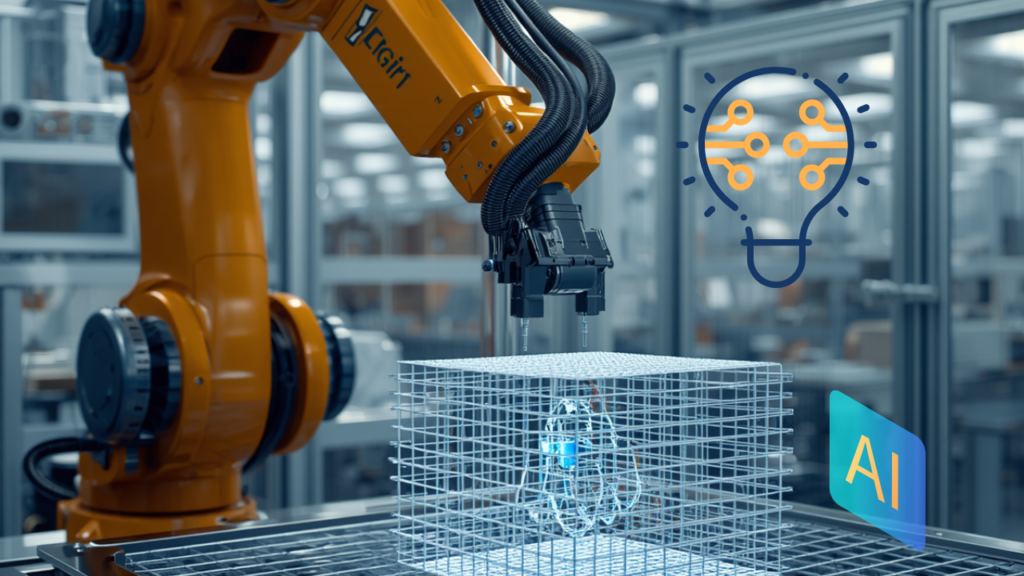
Designers spend less time fixing geometry and more time shaping immersive experiences.
Conclusion: A New Era for Intelligent 3D Design
The digital world is expanding rapidly, and the demand for high-quality 3D assets continues to grow. From games and films to architecture and virtual reality, designers must balance visual detail with computational efficiency.
Artificial intelligence offers a powerful solution. By combining advanced machine learning with geometric analysis, automated 3d mesh optimization using ai technology transforms complex workflows into streamlined processes. It accelerates production, improves rendering performance, reduces file sizes, and enables large-scale digital creation. Yet the most exciting aspect of this technology is not automation itself.
It is the opportunity it creates for human creativity. When designers are freed from repetitive optimization tasks, they can focus on storytelling, innovation, and artistic expression. The future of 3D design will not be shaped by artificial intelligence alone. It will be shaped by the collaboration between intelligent machines and imaginative human minds. And within that collaboration lies the next generation of digital creativity.
Read more:
Best AI writing essays in 2026

Founder of Aivexify
Himanshu Deora is an AI tools researcher and digital publisher who tests AI software, automation tools, and emerging technology trends and AI content creator passionate about sharing helpful guides, AI tools, software tutorials, and the latest digital trends. Through Aivexify, he helps readers discover smart technology, productivity tools, and practical online resources in a simple and easy-to-understand way.