

Meta Description: Discover how AI NPCs work, the memory systems powering them, and why persistent AI-powered NPCs are transforming modern gaming experiences forever.
Imagine stepping back into a game after a two-week break and having a shopkeeper greet you with, “You’re the one who saved the blacksmith’s son last month, aren’t you?” No scripted trigger. No dialogue tree you’ve seen a dozen times. Just a character who actually remembers you.
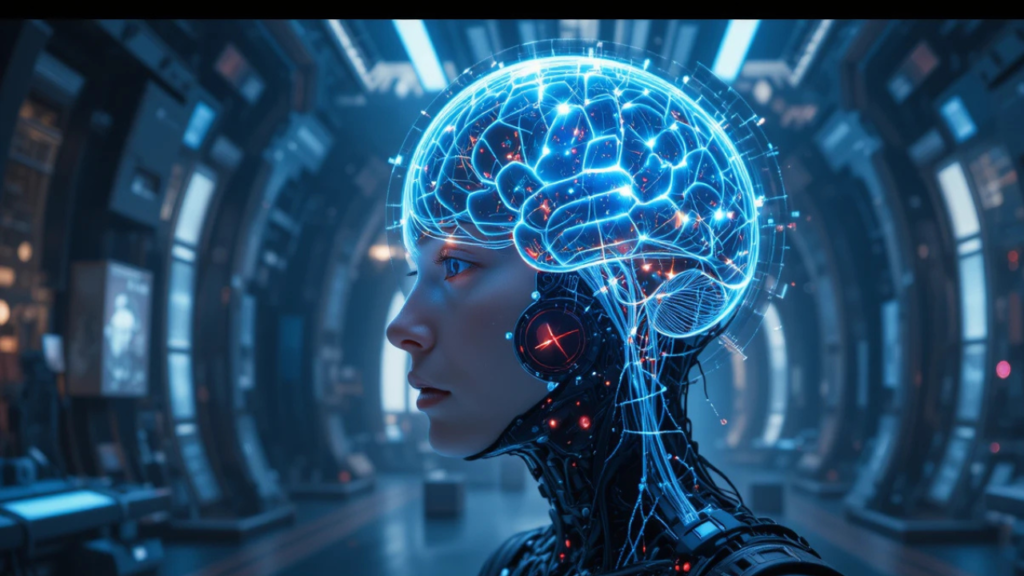
That’s not science fiction anymore. It’s where gaming is heading right now — and it’s being driven by a new generation of AI NPC technology that gives non-player characters genuine, persistent memory of who you are and what you’ve done.
In this article, you’ll learn exactly how AI NPCs work under the hood, what makes AI NPC memory systems different from traditional game AI, and why persistent AI NPCs are poised to change how we think about storytelling in games. Whether you’re a curious gamer, a developer, or just someone fascinated by where artificial intelligence is going, there’s something here for you.
What Are AI NPCs — And Why Do Traditional Ones Fall Short?
To understand why AI-powered NPCs are exciting, it helps to understand what came before them.
Traditional NPCs are essentially very sophisticated puppets. A game designer writes a set of possible dialogue lines, defines a handful of behavioral states (hostile, friendly, neutral), and the NPC cycles through those states based on rigid conditions. If you punch a guard, he turns hostile. If you complete a quest, the quest-giver plays a “thank you” animation. If you return three days later, they have no idea who you are.
This approach has served games well for decades. But it has a ceiling. No matter how beautifully written the dialogue, players eventually feel the seams. The NPC isn’t really reacting to you — it’s reacting to a flag in a database that says “quest completed: true.”
AI NPC technology breaks that ceiling by replacing static scripts with dynamic, model-driven behavior. Instead of asking “what did the designer write for this situation,” the system asks “what would this character actually do, given everything it knows?”
How AI NPC Memory Systems Actually Work
The memory layer is the heart of what makes a persistent AI NPC feel alive. Here’s how it typically functions.
Short-Term and Long-Term Memory
Most AI NPC memory systems are built around two layers, mirroring how human memory is often described in cognitive science.
Short-term memory captures what’s happening right now — the current conversation, the player’s recent actions in the last few minutes of play. This feeds directly into the NPC’s responses in real time. If you just told an NPC you were looking for the mayor, a short-term memory system ensures the NPC doesn’t immediately ask you why you’ve come to town.
Long-term memory is where things get genuinely interesting. This layer stores meaningful events across sessions — major story choices, favors done or refused, alliances formed or broken, even tone and personality impressions of the player. When you return to a village weeks later, the NPC can pull from this long-term store and acknowledge your history.
Vector Databases and Semantic Retrieval
Under the hood, many modern AI NPC systems use something called a vector database to store and retrieve memories. Rather than storing facts as rigid key-value pairs (“quest_saved_merchant = true”), memories are encoded as mathematical representations that capture meaning and context.
When the NPC needs to respond, the system performs a semantic search — essentially asking “what do I know that’s relevant to this moment?” It retrieves the most contextually appropriate memories and feeds them into the language model generating the NPC’s response. This means NPCs don’t just remember that something happened — they remember it in a way that influences how they speak, what they prioritize, and how they treat the player emotionally.
The Role of Large Language Models
Generative AI NPCs use large language models (LLMs) — the same underlying technology as conversational AI assistants — to generate dialogue on the fly. Rather than selecting from pre-written lines, the NPC’s “brain” synthesizes a response based on its character description, its retrieved memories, and the current situation.
This is what enables genuine surprise. The player can say something the designer never anticipated, and the NPC can still respond in a way that’s consistent with its personality, its history with the player, and the world it inhabits.
Dynamic NPC Behavior: Beyond Scripts and Dialogue Trees
AI NPC technology isn’t only about conversation. Dynamic NPC behavior extends to how characters move through the world, make decisions, and pursue goals independent of player interaction.
Goal-Driven AI Architectures
Some of the most compelling persistent AI NPCs use goal-oriented action planning (GOAP) or similar architectures. The NPC has a set of desires — stay safe, accumulate wealth, maintain relationships — and autonomously decides how to pursue them based on the current state of the world.
A merchant NPC with this kind of system might close up shop early if rumors of bandits are spreading. A rival character might seek out allies after the player humiliated them publicly. These behaviors emerge naturally from the system rather than being hand-authored for every possible situation.
Emotional State Tracking
More advanced implementations include emotional modeling — tracking how an NPC feels about the player and the world over time. These aren’t surface-level “happiness meters.” They’re weighted systems that factor in the nature, recency, and significance of interactions.
An NPC might forgive a minor slight over time but hold a deep grudge over a genuine betrayal. They might grow fond of a player who consistently treats them with respect, offering better prices, sharing secrets, or going out of their way to help. This emotional continuity is what turns a game character into something closer to a relationship.
Real-World Examples of Generative AI NPCs in Games
AI NPC technology is no longer purely theoretical. Several projects have already demonstrated what persistent, memory-enabled NPCs look like in practice.
Ubisoft’s NEO NPC project, revealed in 2024, showed NPCs capable of conducting open-ended conversations using generative AI, with the ability to remember context across interactions. NVIDIA’s ACE platform has similarly demonstrated AI characters that can speak freely, adapt their tone, and retain information about the player.
Games like Cyberpunk 2077 and open-world RPGs have long experimented with reactive NPC systems, but the next generation goes much further. Startups and indie developers are now building entire game experiences around AI characters that live, remember, and evolve — with some projects running persistent NPC “lives” even when no player is online.
Why AI NPC Memory Changes Game Design Fundamentally
Persistent AI NPCs don’t just improve existing game design — they force designers to rethink the craft entirely.
When NPCs remember everything, player choices carry genuine weight. There’s no “save scumming” your way out of a reputation. Actions taken early in a game ripple forward in ways that are difficult to predict and impossible to fully script. The world starts to feel like it has a memory of its own.
This also opens up entirely new narrative structures. Instead of branching story trees that designers have to build and maintain, AI-powered NPCs can help co-create stories organically. The player’s particular relationship with a particular NPC becomes a unique narrative thread that no other player has experienced in quite the same way.
For developers, this is both liberating and challenging. The tools for authoring and testing AI NPC behavior are still maturing. Keeping AI-generated dialogue on-brand, lore-consistent, and appropriate for all audiences requires careful design of the character’s underlying prompts and constraints. But the creative potential is enormous.
Challenges and Limitations of Current AI NPC Technology
It’s worth being honest about where the technology still struggles.
Consistency over very long timescales is hard. Language models have finite context windows, and even sophisticated memory retrieval systems can lose nuance over hundreds of hours of play. An NPC might remember that you saved them but forget the specific circumstances in a way that feels slightly off.
Computational cost is a real constraint. Running a full LLM inference for every NPC in a busy city scene is, at present, prohibitively expensive. Most implementations focus AI NPC technology on a small number of key characters while leaving background characters on traditional systems.
Content safety and unpredictability present ongoing challenges. Open-ended generative dialogue means NPCs might say unexpected things. Robust filtering and character-level guardrails are essential — and getting that right without making characters feel sterile is a genuinely difficult balancing act.
Player manipulation is a subtle but important concern. Because generative AI NPCs can be guided by conversation, some players may find ways to steer characters into behaving inconsistently with their established personality or the game’s values. Designing against this while preserving freedom of interaction is an active area of research.
Frequently Asked Questions About AI NPC Technology
What is an AI NPC? An AI NPC (Artificial Intelligence Non-Player Character) is a game character whose behavior, dialogue, and memory are driven by artificial intelligence systems — particularly large language models and dynamic behavior engines — rather than pre-written scripts. This allows them to respond naturally to player actions, remember past interactions, and behave in ways that feel genuinely reactive and alive.
How do AI NPCs remember players across sessions? Persistent AI NPCs use memory systems that store meaningful events and interactions in a database — often a vector database designed for semantic retrieval. When the player returns, the system fetches relevant memories and incorporates them into the NPC’s responses, allowing the character to reference past events, relationships, and player behavior in a contextually appropriate way.
Are AI-powered NPCs available in games right now? Yes, though widespread adoption is still developing. Several game studios and technology platforms — including Ubisoft and NVIDIA — have demonstrated or released AI NPC systems. Some indie games and experimental projects already feature fully generative NPC conversations with memory. Broader integration in mainstream titles is expected to grow significantly over the next few years.
Will AI NPCs replace human writers in games? Not entirely. Human writers remain essential for establishing the world, defining character personalities, writing lore, and crafting the overarching narrative structure. AI NPC technology extends what’s possible within those frameworks — it doesn’t replace the authorial foundation. Think of it as giving hand-crafted characters a much more responsive and dynamic voice.
What technology powers generative AI NPCs? Generative AI NPCs are typically powered by large language models (LLMs) for dialogue generation, combined with vector databases for memory storage and retrieval, behavior planning systems for autonomous action, and emotional modeling layers for relationship tracking. Some implementations also use speech synthesis to give NPCs realistic voices in real time.
Conclusion: The Future of AI NPCs Is Already Here
The idea of NPCs that remember you, grow with you, and react to your choices in genuinely unpredictable ways has been a dream of game developers and players alike for decades. AI NPC technology is making that dream real — not all at once, and not without challenges, but unmistakably and quickly.
As AI NPC memory systems mature, as computational costs fall, and as developers build better tools for shaping and constraining generative behavior, we’re heading toward a world where the characters in games feel less like furniture and more like genuine inhabitants of the worlds we explore.
If you’re a developer curious about integrating AI NPC systems into your own project, now is a genuinely exciting time to start experimenting. The foundational tools — from LLM APIs to vector database integrations — are more accessible than ever. And if you’re a player, pay attention: the NPCs in your next favorite game might just remember your name.
Interested in the broader world of AI in gaming? Explore our related articles on procedural world generation, AI-driven storytelling, and the ethics of synthetic characters in interactive media.
10 Best AI Conversation Systems for Games Developers in 2026

Founder of Aivexify
Himanshu Deora is an AI tools researcher and digital publisher who tests AI software, automation tools, and emerging technology trends and AI content creator passionate about sharing helpful guides, AI tools, software tutorials, and the latest digital trends. Through Aivexify, he helps readers discover smart technology, productivity tools, and practical online resources in a simple and easy-to-understand way.