

You’re in the final round of Valorant. The spike is planted 3D Aim Trainers. One enemy left. You swing the corner, crosshair placement feels perfect… and you whiff the shot by a pixel. The round ends. The game feels rigged. Sound familiar?
That single missed flick or sloppy track isn’t just bad luck. It’s the symptom of a deeper problem that most ranked players hit after a certain point: your aim plateaus because raw game time stops fixing the real issues.
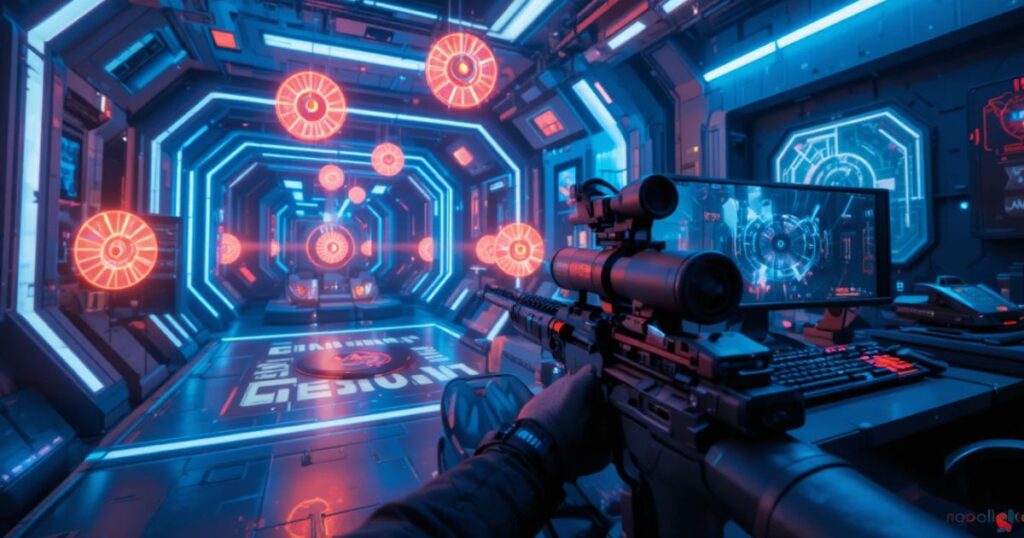
In 2026, the serious players aren’t just queuing more ranked games. They’re spending dedicated time in 3D Aim trainers — and the ones pulling ahead fastest are using the AI-powered versions.
Why Most FPS Players Hit a Wall
You grind deathmatches, watch pro VODs, change your sensitivity every week, and still feel inconsistent. Here’s what’s actually happening:
- Autopilot mode: Your brain starts relying on pattern recognition from the same few maps instead of building pure mechanical skill.
- Bad habits compound: That slight over-flick or lazy tracking becomes muscle memory.
- Stress aiming: In real games, adrenaline messes with your fine motor control. You can’t train calm precision under pressure just by playing more anxious ranked games.
- Reaction lag and inconsistency: Without targeted drills, your nervous system doesn’t optimize the specific pathways for flicking, tracking, or micro-adjustments.
This is where dedicated aim training changed the game — and why 3D aim trainers exploded in popularity.
What 3D Aim Trainers Actually Train (The Real Mechanics)
Good aim isn’t one skill. It’s several working together:
- Flicking: Explosive, precise movements to snap onto targets.
- Tracking: Smoothly following moving enemies while maintaining accuracy.
- Target switching: Quickly resetting and acquiring new targets.
- Micro-adjustments: Tiny corrections once your crosshair is near the target.
- Crosshair placement: The pre-aim discipline that makes everything else easier.
The best trainers isolate these in controlled but realistic 3D environments, so you build the exact muscle memory and neural pathways that transfer to Valorant, CS2, Apex Legends, and more.
The AI Revolution in Aim Training
Here’s where it gets really interesting in 2026.
Traditional aim trainers gave you static drills. Modern AI-powered ones study you.
- They analyze your sessions and spot patterns: Are you over-flicking on left-to-right targets? Do you lose accuracy after 20 minutes? Is your vertical tracking weaker than horizontal?
- Adaptive difficulty that scales in real-time based on your performance.
- Personalized routines that focus on your actual weaknesses instead of generic “grind these 10 scenarios.”
- Heatmaps and reaction analysis that show exactly where you lose time or precision.
- Performance prediction — some tools now forecast how your in-game performance might improve based on training consistency.
This isn’t sci-fi anymore. It’s machine learning applied to esports performance, and it’s accelerating improvement faster than old-school grinding ever could.
Best 3D Aim Trainers in 2026 (Tested for Real Games)
3D Aim Trainer (3daimtrainer.com & Steam) Browser-friendly, completely free, and surprisingly deep. Great for quick sessions and has solid stats tracking. Excellent entry point that supports major games. Over 13 million players have used it. Perfect if you want zero commitment and browser convenience.
Aimlabs The polished, free heavyweight. Strong AI features, clean UI, and excellent game-specific playlists for Valorant, CS2, etc. Trusted by millions and backed by serious analytics. Feels more modern and beginner-friendly.
KovaaK’s Aim Trainer The veteran’s choice. Insanely customizable with thousands of community scenarios. Steeper learning curve but offers unmatched depth once you’re serious. Many high-level players still swear by it for pure mechanical work.
Others worth checking: Aimbeast for performance, Aiming.pro for dynamic drills.
My take: Start with 3D Aim Trainer or Aimlabs if you’re newer. Move to KovaaK’s when you want to go pro-level custom.
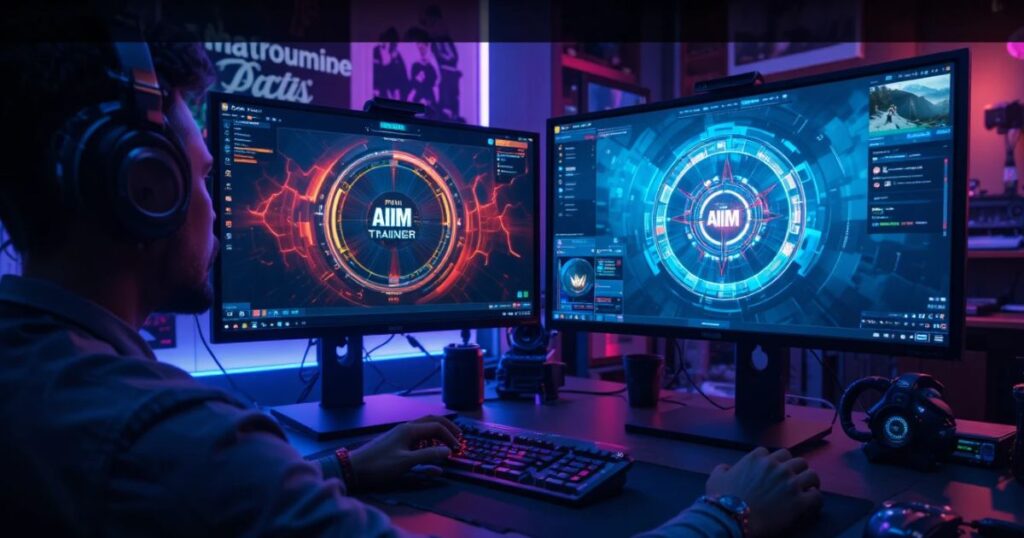
Can Aim Trainers Replace Real Matches?
No — and that’s the point.
Aim trainers build the raw tools. Real matches teach you when and how to use them under pressure, with game sense, utility, and decision-making layered on top.
The smartest players treat it like athletes do: gym work (aim trainer) + sport-specific practice (deathmatch/ranked) + review (VODs + stats).
The debate is healthy though. Some pros credit aim trainers with 30-50% of their mechanical gains. Others say it’s overrated without proper transfer training. The truth is somewhere in the middle — consistent, smart use clearly moves the needle.
The Future: Where This Is Heading
We’re already seeing early versions of:
- Eye-tracking integration for even deeper analysis
- Biometric feedback (heart rate affecting difficulty)
- AI coaches that sound like actual pro mentors
- Neural adaptation tools that optimize training around your circadian rhythm and fatigue levels
In a few years, your aim trainer might literally predict when you’re about to tilt and adjust sessions accordingly. The gap between casual and pro mechanical skill is narrowing faster than ever.
Final Thoughts
“3D Aim Trainer” isn’t just another trending search because people are bored. It’s trending because competitive FPS players are getting more serious about treating gaming like the high-performance discipline it is.
If you’re stuck in the same rank for months, the solution isn’t another 100 hours of ranked autopilot. It’s 20-30 focused minutes a day in a good trainer, with intention and analysis.
The tools exist. The science supports it. The only question left is: Are you actually going to put in the work?
Your aim isn’t fixed. It’s trainable.
Now go click some heads — the virtual ones first.
Best AI NPC Games in 2026

Founder of Aivexify
Himanshu Deora is an AI tools researcher and digital publisher who tests AI software, automation tools, and emerging technology trends and AI content creator passionate about sharing helpful guides, AI tools, software tutorials, and the latest digital trends. Through Aivexify, he helps readers discover smart technology, productivity tools, and practical online resources in a simple and easy-to-understand way.